Visiting Parliament Hill in Ottawa: Tours, Access & Practical Tips
Visiting Parliament Hill in Ottawa: Tours, Access & Practical Tips
Parliament Hill is one of Ottawa’s defining landmarks, but visiting it today is different from simply walking up to a historic government building. It remains the symbolic centre of Canada’s parliamentary democracy and an active parliamentary precinct, while major rehabilitation work continues on Centre Block.
That construction has changed how visitors experience the site. Centre Block, including the Peace Tower, and the historic Library of Parliament building are currently closed to public access. The House of Commons is temporarily located in West Block, while the Senate meets in the Senate of Canada Building on Rideau Street. Separate visitor experiences are available for these locations, along with seasonal tours of East Block and an immersive exhibition focused on Centre Block.
For travellers, that means a successful Parliament Hill visit requires a little planning. Tour locations, security procedures, identification requirements and schedules vary by building, and parliamentary business can affect public access with little notice.
This guide explains what you can currently visit, how Parliament tours work, what to expect at security, when to go, how to get there and which nearby Ottawa attractions fit naturally into the same itinerary.
Why Parliament Hill Matters
Parliament Hill is both a national landmark and part of a functioning parliamentary precinct. Its importance comes not only from its architecture but from the political institutions, ceremonies and public life associated with it.
Understanding that distinction makes the visit more rewarding. Rather than approaching Parliament Hill only as a place for photographs, visitors can use the experience to learn how Canada’s Parliament functions and how the historic buildings have evolved alongside the country.
More Than an Ottawa Landmark
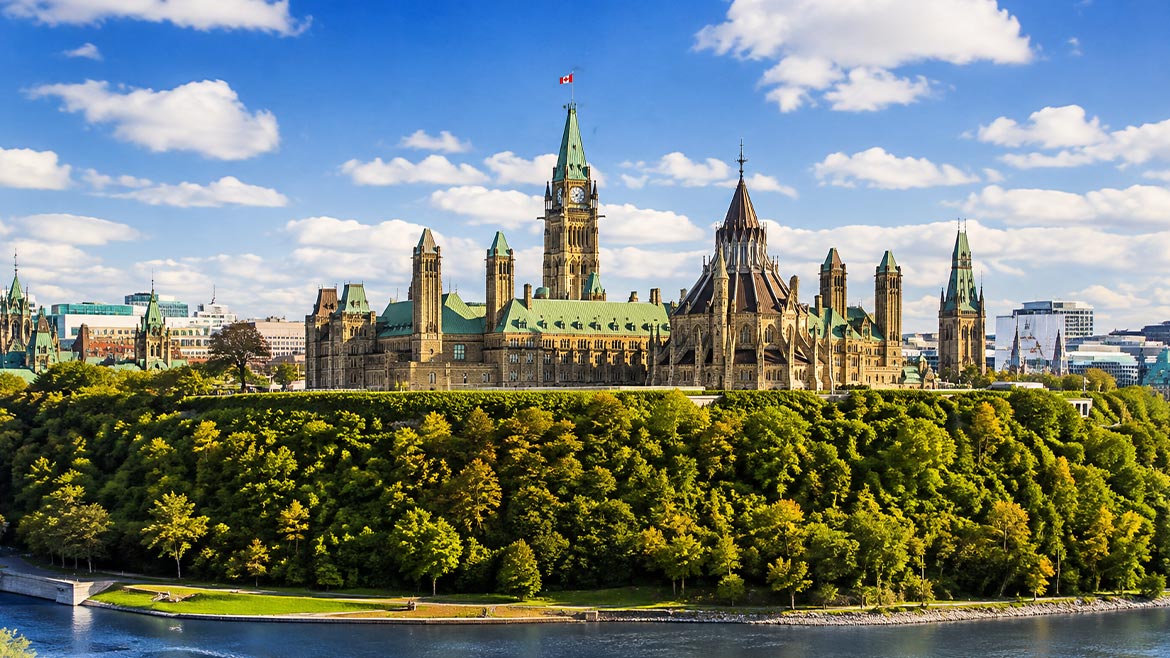
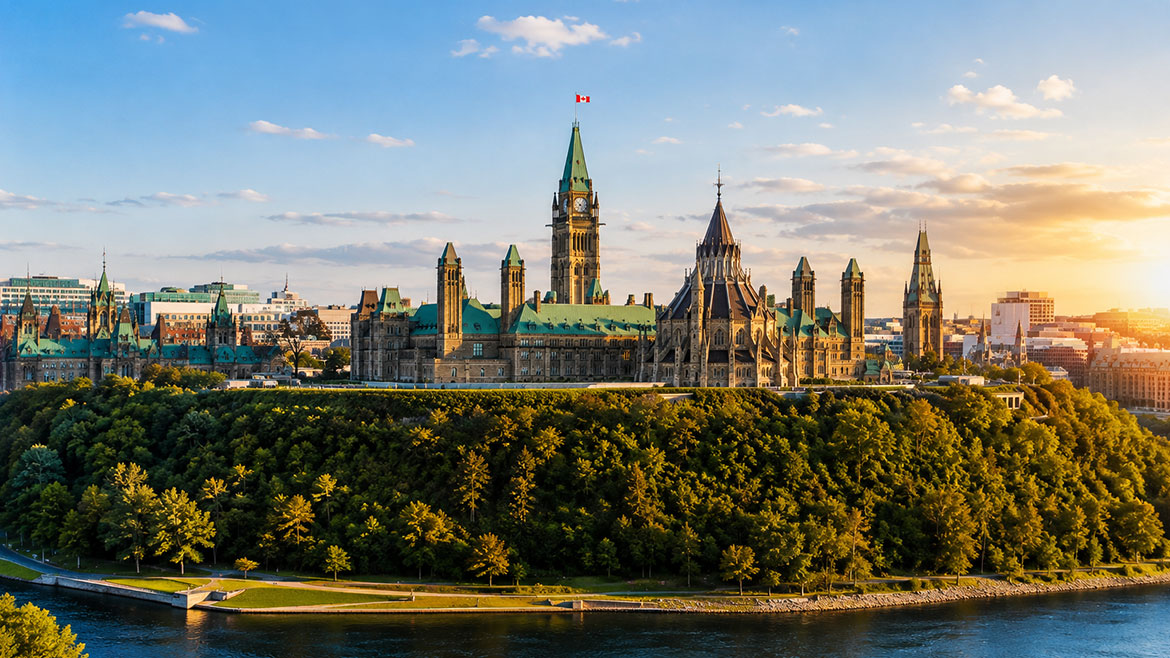
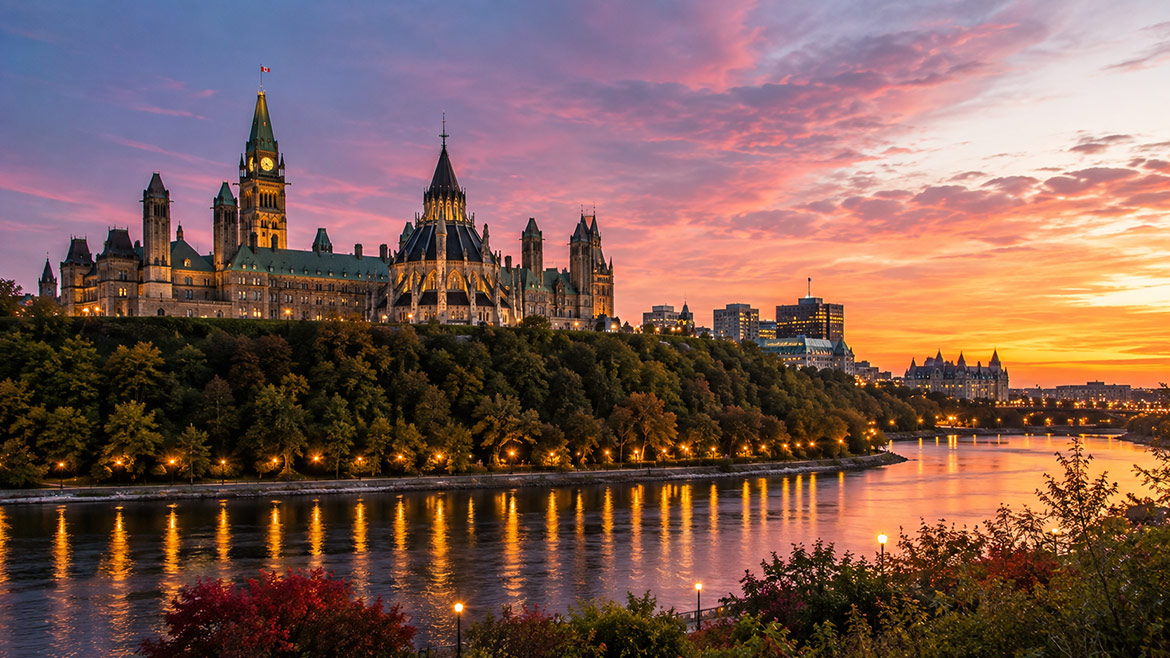
Parliament Hill overlooks the Ottawa River in downtown Ottawa, Ontario. The parliamentary precinct includes several historic buildings and nearby facilities used by the Senate, House of Commons, parliamentarians and parliamentary staff.
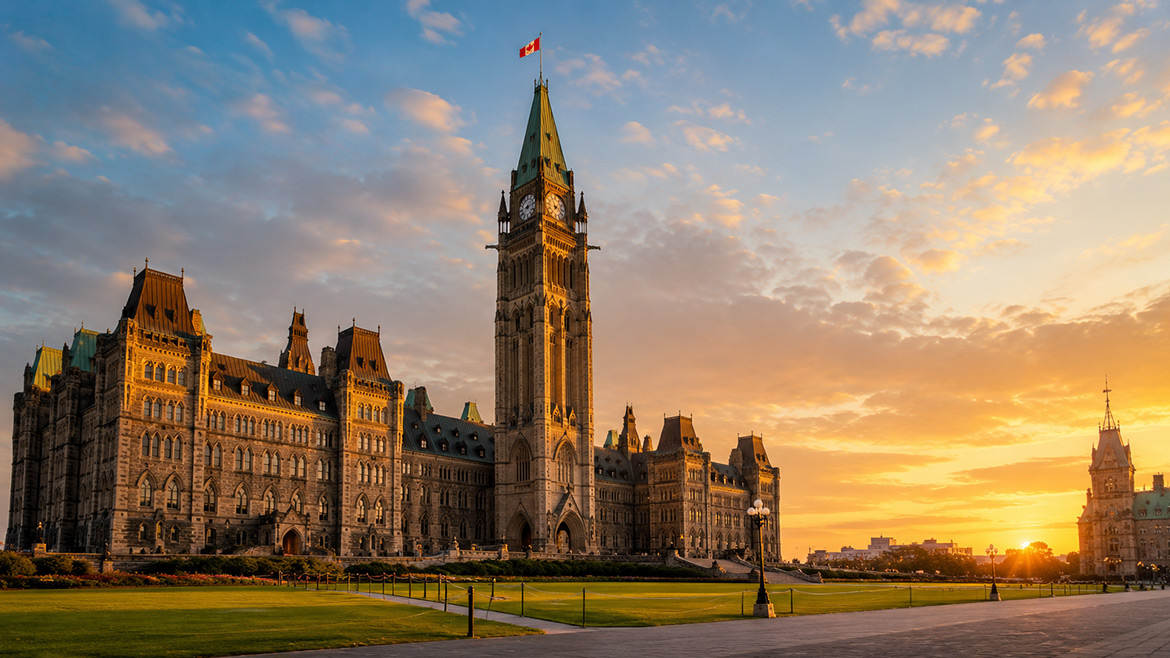
The buildings are closely associated with Canada’s federal political history. West Block and East Block date from the original 19th-century parliamentary complex, while the current Centre Block was constructed after a fire destroyed most of its predecessor in 1916.
Today, Parliament Hill is also a public space. Visitors come for guided tours, architecture, ceremonies, views and national events, while demonstrations and official activities may also take place within or around the precinct.
Because Parliament is still a working government precinct, access can change with parliamentary business, security requirements and special events.
Architecture, the Peace Tower and Library of Parliament
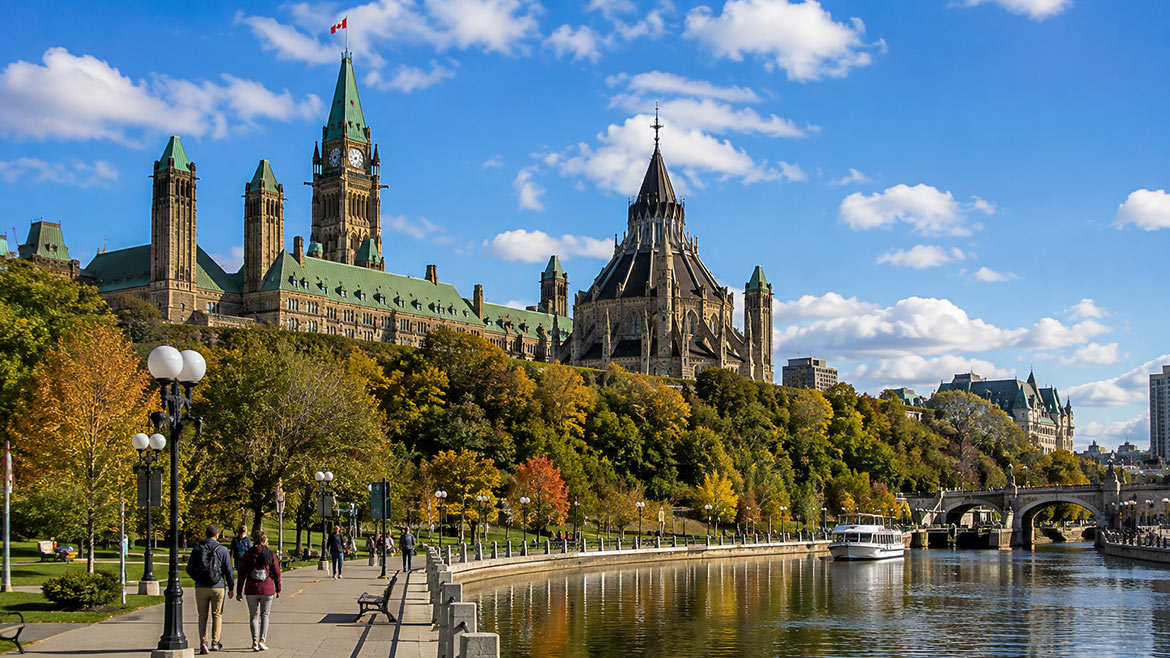
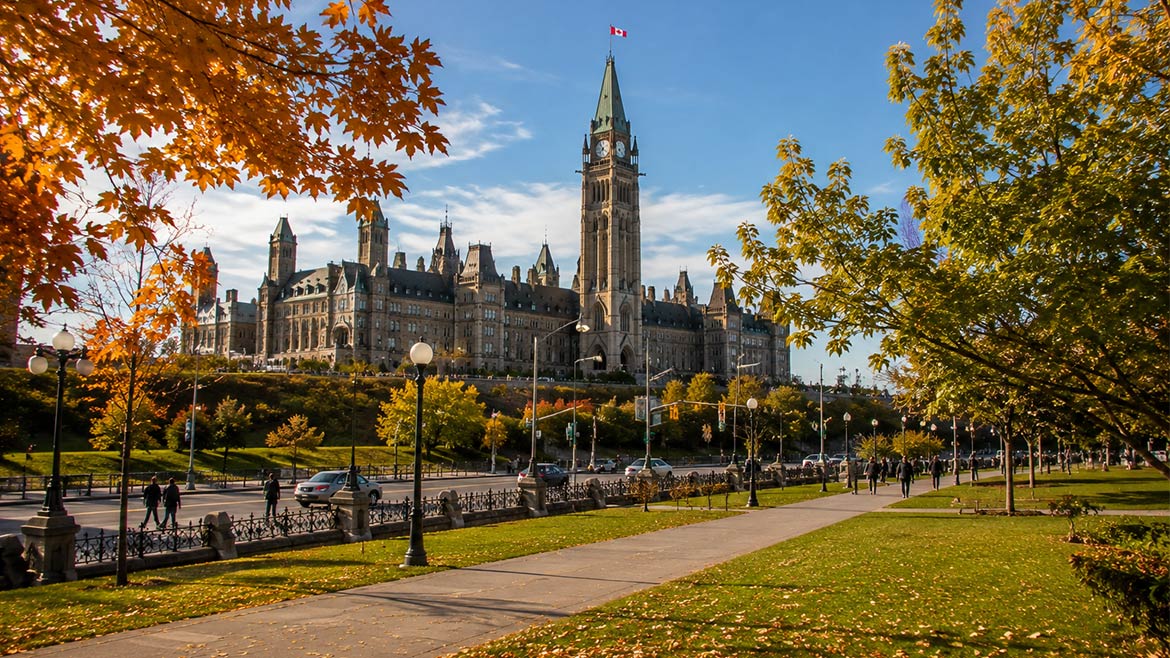
Gothic Revival and related Neo-Gothic architectural influences give Parliament Hill its distinctive appearance. Pointed arches, towers, stone carving, copper roofs and asymmetrical forms are visible throughout the historic precinct.
The Peace Tower is the best-known feature of Centre Block and has become one of the most recognizable symbols of Ottawa. The Library of Parliament, whose historic main building opened in 1876, is another major architectural feature. Its historic main building survived the 1916 fire that destroyed Centre Block, in large part because it was separated from the main building by a corridor and iron doors.
However, travellers planning a current visit should understand an important limitation: Centre Block, including the Peace Tower and the historic Library of Parliament building, is closed during the major rehabilitation project. They can still be viewed from outside, but their interiors are not open to regular visitors.
If you want more than an exterior view, reserve one of the parliamentary visitor experiences currently operating elsewhere in the precinct.
What Can You Visit at Parliament Hill Right Now?
The biggest source of confusion for first-time visitors is the assumption that there is one standard “Parliament Hill tour.” During Centre Block’s rehabilitation, Parliament’s visitor programming is distributed across several locations.
Each experience focuses on a different part of Canada’s parliamentary history or current institutions, so choosing the right one depends on what you want to see.
House of Commons at West Block
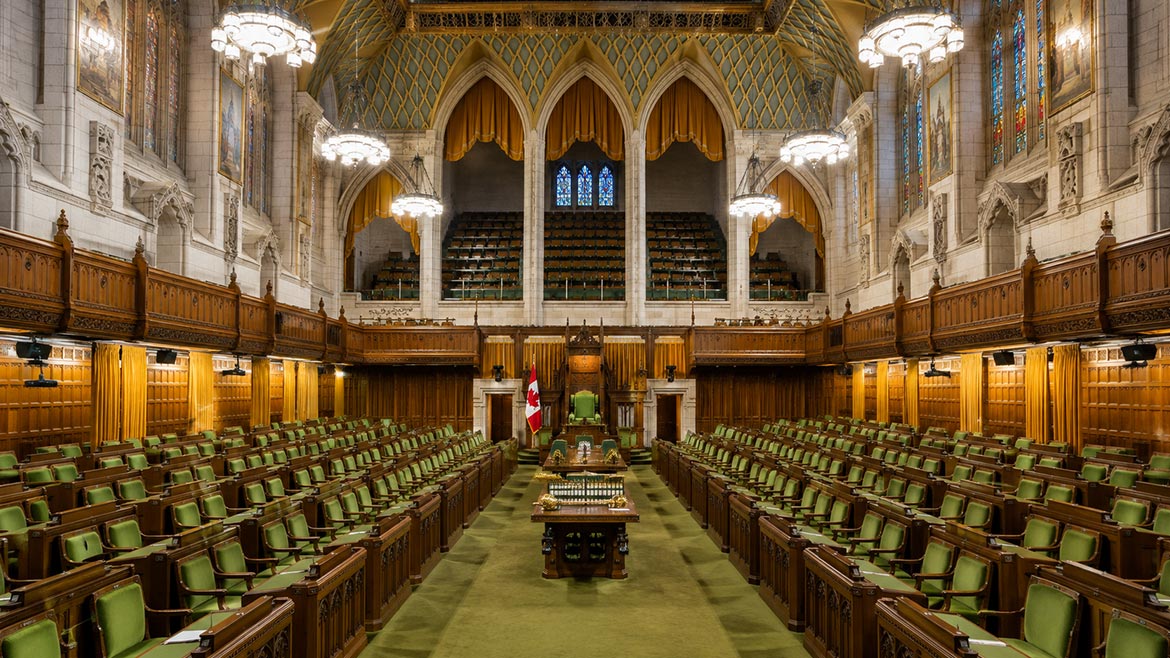
West Block is currently the temporary home of the House of Commons. Guided tours take visitors inside this historic building and explain the role of the House of Commons, its architecture and parliamentary work.
Regular guided tours are free and typically last about 40 minutes. Visitors should arrive approximately 30 minutes before their scheduled tour to complete registration and security screening.
Tours are not offered while the House of Commons is sitting, and schedules can change because of parliamentary activity. Advance reservations are therefore strongly recommended rather than relying on same-day availability.
West Block is located at 111 Wellington Street on Parliament Hill, with visitor entry through the Visitor Welcome Centre.
For many first-time visitors, this is the most relevant interior experience because it combines a historic Parliament Hill building with the current House of Commons chamber.
Senate of Canada Building
The Senate currently meets in the Senate of Canada Building at 2 Rideau Street, a short walk east of Parliament Hill. The building is Ottawa’s former central railway station and was adapted to serve as the Senate’s temporary home during the Centre Block rehabilitation.
Free guided tours generally last about 30 minutes and introduce visitors to the Senate chamber, the building and the role of the upper house in Canada’s parliamentary system.
The Senate tour is a separate experience from a West Block tour, with its own ticket and security process. If you plan to visit both, leave enough time to walk between the buildings and complete screening again.
East Block Tours
East Block is one of Parliament Hill’s original buildings and provides a different experience from the current House of Commons and Senate tours. Its restored heritage rooms help visitors understand parliamentary and political life during the 19th century.
The building once contained important executive offices, including the office of Canada’s first prime minister, Sir John A. Macdonald. Its historic spaces also reflect the period when much of the federal executive operated from East Block.
Guided visitor tours are seasonal and are generally offered during the summer period. Because availability is limited to particular periods, check the current Parliament visitor schedule before building an itinerary around East Block.
Parliament: The Immersive Experience
Travellers who want to understand Centre Block while the building itself is closed can visit Parliament: The Immersive Experience at 211 Sparks Street.
The experience is free to visit, and advance reservations are recommended, particularly during busy periods. The experience takes approximately 45 minutes and is particularly useful for visitors who expected to tour the main Parliament building.
It can also work well alongside an exterior walk around Parliament Hill because it provides context for a building that you can currently see but cannot enter.
Parliament Hill Tours vs Independent Exploration
You do not need a tour simply to see Parliament Hill from outside. The surrounding grounds and downtown area can still make for an enjoyable self-guided visit, particularly for travellers interested in architecture and photography.
Interior access is different. Entering parliamentary buildings and visitor experiences requires following the procedures established for each location, and reservations are recommended for guided tours.
When a Guided Tour Is Worth It
A guided tour is particularly useful on a first visit because Parliament Hill’s significance is difficult to understand from its exterior alone.
Tours explain how the Senate and House of Commons function, how the buildings are used and how Parliament has adapted during the Centre Block rehabilitation. They also provide access to interiors that cannot simply be entered independently.
If your Ottawa schedule allows only one parliamentary tour, choose according to your interests. West Block is the stronger choice for travellers who want to see the current House of Commons setting, while the Senate tour focuses on the upper chamber.
East Block is particularly interesting for architecture and political history when its seasonal tours are operating.
Exploring the Grounds Independently
An independent visit gives you more control over your schedule. You can walk around the accessible portions of the grounds, photograph the exterior architecture and continue towards nearby landmarks without committing to a fixed tour time.
This works especially well if Parliament tickets are unavailable or you have limited time in Ottawa.
Allow at least 30–45 minutes for an exterior-focused visit. If you add a guided tour, security screening and time to explore the surrounding area, approximately 90 minutes to two hours is more realistic.
An independent visit is enough for the exterior, while a reserved tour provides access to the parliamentary buildings and more context about how they are used.
Security and Entry Requirements for Parliament Tours
Security screening is part of visiting Parliament’s interior spaces. Procedures vary slightly by site, so travellers should review the requirements for their specific tour before arriving.
The most useful strategy is to travel light and arrive at the time recommended for your particular experience rather than reaching the entrance at the scheduled start time.
Identification and Security Screening
Visitors entering parliamentary buildings are subject to security screening. For West Block, all visitors aged 16 and older must currently present valid government-issued photo identification.
When reserving West Block tickets, visitors also provide their full name and date of birth. Requirements may differ between parliamentary visitor sites, so check the instructions attached to each reservation rather than assuming that one building’s procedure applies everywhere.
For a West Block tour, visitors are advised to arrive about 30 minutes before the scheduled tour. Senate visitors should generally arrive about 25 minutes early, while East Block visitors are advised to arrive about 5–10 minutes before their tour.
Security and parliamentary operations can cause delays. Arriving at the recommended time is therefore part of the visit, not optional extra time.
Bags and Restricted Items
Travelling with minimal belongings makes parliamentary security considerably easier. West Block currently permits one bag per visitor smaller than 35.5 × 30.5 × 19 centimetres.
The Parliamentary Protective Service restricts a range of items for security reasons. Check the current restricted-items rules before your visit, particularly if you are carrying anything beyond an ordinary day bag.
There is no bag or coat check at West Block, so bringing an oversized or prohibited item can create a genuine problem rather than a minor inconvenience.
Photography and Visitor Conduct
Personal photography and video are permitted in West Block, subject to visitor and security rules. Flash photography, large filming equipment and other restricted equipment may require prior approval.
Rules can vary by location and circumstance. Always follow posted instructions and guidance from parliamentary staff or security officers, particularly during official proceedings or special events.
Parliament is a workplace as well as a visitor attraction. Demonstrations, parliamentary business and formal events can occur around the precinct, so visitors should be prepared for temporary barriers, redirected pedestrian routes or changes in access.
Accessibility at Parliament Hill
Accessibility should be considered when choosing between the different parliamentary visitor experiences, particularly because the precinct currently operates across several buildings.
West Block and the Visitor Welcome Centre are wheelchair accessible, and service animals are permitted. Visitors who need specific accommodations should contact the Tours Reservation Office in advance.
During the standard West Block tour, visitors normally use several flights of stairs. Elevators are available for people who prefer or need to avoid stairs, but staff should be informed.
Wheelchairs and cane seats may also be available from visitor services on a first-come, first-served basis. Sign-language interpretation in ASL or LSQ can be requested in advance for West Block tours.
Visitors with mobility requirements who need transportation assistance to the Visitor Welcome Centre should arrange this ahead of time. Because accessibility procedures and facilities vary by site, confirming requirements before your visit is preferable to trying to make arrangements after arrival.
Best Time to Visit Parliament Hill
There is no single best month or hour for every traveller. The right time depends on whether your priority is a parliamentary tour, exterior photography, seasonal programming or a quieter walk around the precinct.
Tour availability should usually determine your schedule first. Once you have a reservation, build the rest of your downtown Ottawa itinerary around it.
Best Time of Day
Morning is often practical for Parliament Hill because it gives you more flexibility if security or access takes longer than expected. It also leaves the rest of the day available for nearby attractions.
If you are visiting only the exterior, early morning can provide a quieter atmosphere than the middle of a busy summer day. Late afternoon can also be pleasant for walking and photography, although you should not assume interior tours will still be available.
For a reserved tour, the official arrival time is more important than trying to target a theoretically less crowded period.
Visiting in Summer
Summer is one of the busiest periods for tourism in Ottawa and typically offers the widest range of visitor programming, including seasonal East Block tours.
Advance planning is especially useful in summer, when popular tour times can fill and large events or ceremonies may affect access around Parliament Hill.
Do not assume that historic seasonal programs operate on the same dates or schedule every year. Ceremonial programming can change, so verify current details before planning a trip specifically around an event such as a military ceremony.
Visiting in Autumn and Spring
Spring and autumn can be excellent seasons for exploring central Ottawa on foot. Temperatures are generally more suitable for combining Parliament Hill with several nearby attractions than during the coldest part of winter, although weather can change quickly.
Autumn also brings colourful foliage to parts of the National Capital Region, while spring conditions vary considerably from year to year.
Tour schedules and parliamentary operations remain more important than season alone, so check availability before finalizing your day.
Visiting in Winter
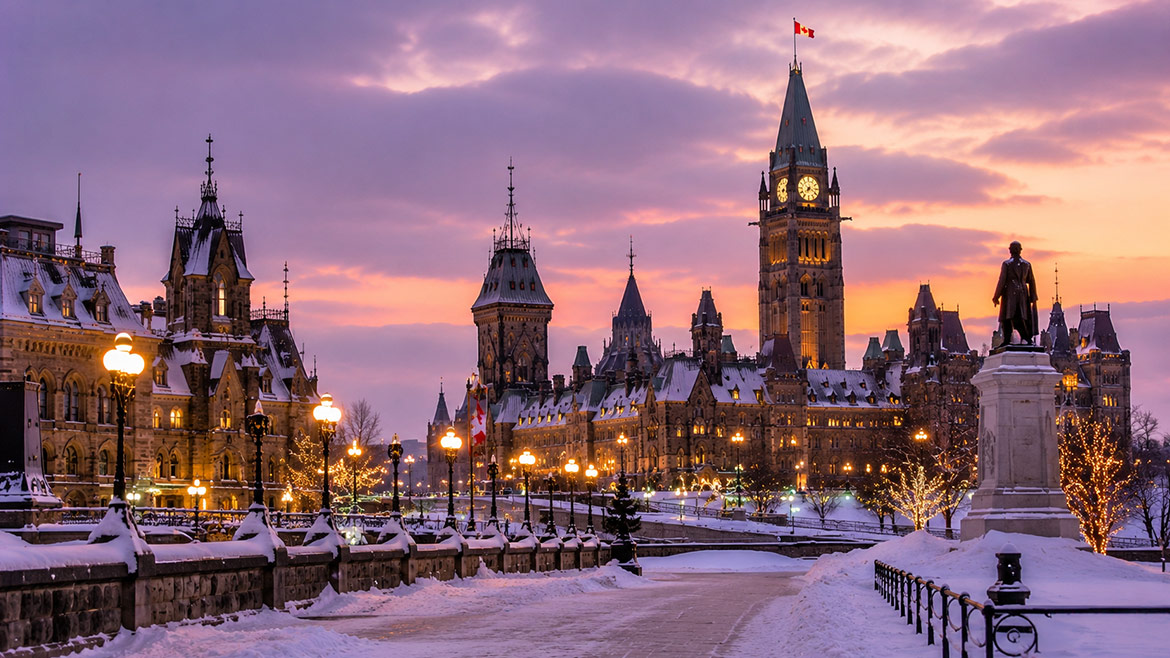
Parliament Hill remains a major Ottawa landmark in winter, but cold temperatures, wind, snow and icy surfaces can change the experience considerably.
Dress for prolonged outdoor exposure rather than simply moving between heated buildings. Winter footwear with good traction is especially useful when exploring downtown Ottawa on foot.
A reserved indoor Parliament experience can be a practical anchor for a winter itinerary, followed by other nearby indoor attractions.
How to Get to Parliament Hill
Parliament Hill occupies a central location on Wellington Street in downtown Ottawa. For most visitors staying downtown, walking or using public transit is easier than driving.
Remember that Parliament visitor experiences are currently spread across several locations. Check the address on your reservation before navigating to “Parliament Hill,” particularly if you are visiting the Senate of Canada Building or Parliament: The Immersive Experience.
Getting There by Public Transit
OC Transpo’s O-Train Line 1 serves downtown Ottawa, with Parliament Station providing convenient access to Parliament Hill, Sparks Street and the surrounding downtown area.
Several bus routes also serve central Ottawa. Travellers coming from Gatineau can use services operated by the Société de transport de l’Outaouais.
From Parliament Station, much of the parliamentary precinct, Sparks Street and nearby downtown attractions can be reached on foot.
Walking From Downtown Ottawa
If you are staying in central Ottawa, walking is often the simplest option. Parliament Hill is close to Sparks Street, the National War Memorial, the Rideau Canal, Confederation Square and the ByWard Market area.
Walking also makes it easier to connect the different parliamentary visitor locations without repeatedly looking for parking.
Allow additional time between scheduled experiences. West Block is on Parliament Hill, while the Senate of Canada Building is at 2 Rideau Street and the Immersive Experience is at 211 Sparks Street.
Driving and Parking
There is no public visitor parking at the Parliament Buildings, so driving directly to Parliament Hill is rarely the most convenient approach.
Public and private parking facilities are available elsewhere in downtown Ottawa, but traffic patterns, street access and temporary restrictions can change.
If you are arriving by car, a better strategy is usually to park once in central Ottawa and complete the Parliament Hill area on foot.
What to See Near Parliament Hill
Parliament Hill sits within one of Ottawa’s most walkable sightseeing areas. Instead of treating it as an isolated attraction, combine it with nearby landmarks that fit naturally into the same route.
How much you add depends on whether you have booked an interior Parliament tour. A tour plus security can occupy a significant portion of a half-day, while an exterior-only visit leaves more room for surrounding attractions.
National War Memorial and Rideau Canal
From Parliament Hill, walk east towards Confederation Square and the National War Memorial. The memorial commemorates Canadians who served and died in military service and is one of the country’s most important commemorative sites.
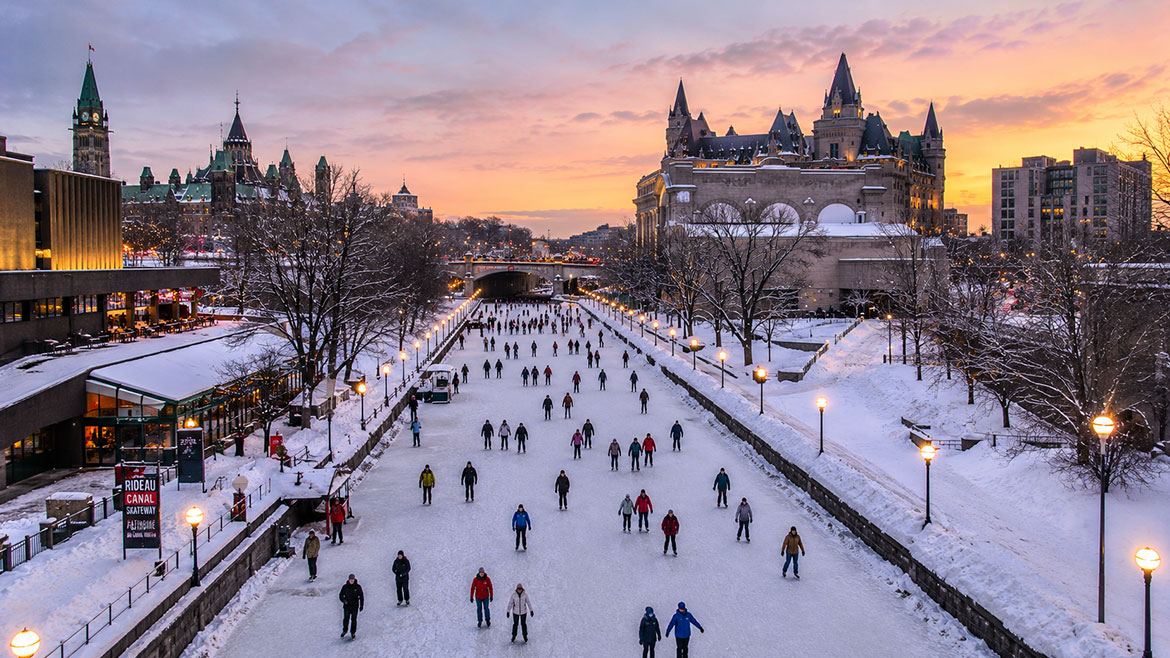
The Rideau Canal begins nearby, beside the Fairmont Château Laurier. The canal is a UNESCO World Heritage Site and an important part of Ottawa’s historic landscape.
In warmer months, the canal area is ideal for walking and sightseeing. In winter, skating conditions depend on weather and ice quality, so never assume the Rideau Canal Skateway will be open on a particular date without checking current conditions.
ByWard Market
Continue east from the Rideau Canal area and you can reach ByWard Market, one of Ottawa’s best-known central neighbourhoods.
The district works well as a lunch or dinner stop after Parliament Hill and provides a noticeable change from the formal civic character of Wellington Street.
Combining Parliament Hill, the National War Memorial, the canal and ByWard Market creates a compact walking route without unnecessary backtracking.
Supreme Court of Canada
The Supreme Court of Canada is west of Parliament Hill on Wellington Street and fits naturally into a civic and political itinerary.
Travellers particularly interested in Canadian institutions can combine the Supreme Court exterior and Parliament Hill in the same walk. If you want an interior visit or guided experience at the Court, check its current public visitor arrangements separately before arriving.
Canadian Museum of History
Across the Ottawa River in Gatineau, Quebec, the Canadian Museum of History is another strong addition for travellers interested in Canadian history and culture.
It requires more time than the attractions immediately surrounding Parliament Hill, so it is better suited to a half-day or full-day itinerary rather than a quick extension to a Parliament tour.
The museum’s location across the river also provides well-known views towards Parliament Hill and the Ottawa skyline.
A Practical Half-Day Parliament Hill Itinerary
A half-day gives most travellers enough time to see Parliament Hill properly without rushing between reservations and nearby landmarks.
The exact sequence should revolve around your confirmed parliamentary tour time, but a practical route could look like this:
- Start at Parliament Hill and allow time to explore the accessible exterior grounds.
- Complete a pre-booked House of Commons tour at West Block or another parliamentary visitor experience.
- Walk east towards the National War Memorial and Confederation Square.
- Continue past the Rideau Canal locks and Château Laurier.
- Finish in the ByWard Market area for lunch, coffee or further sightseeing.
If you have tickets for both the House of Commons and Senate, allow enough time between them for the walk and separate security procedures. Avoid booking experiences back-to-back without a buffer.
Travellers with a stronger interest in Canadian political history could instead head west towards the Supreme Court after Parliament Hill, while those planning a full day can add the Canadian Museum of History later.
Common Mistakes When Visiting Parliament Hill
Most problems at Parliament Hill are avoidable. They usually come from relying on outdated information about Centre Block or treating all parliamentary visitor experiences as though they operate from one entrance.
Before visiting, watch for these common planning mistakes:
- Expecting to enter Centre Block or the Peace Tower: Centre Block remains closed for major rehabilitation, and the historic Library of Parliament is also inaccessible to regular visitors.
- Assuming one Parliament ticket covers everything: West Block, the Senate, East Block and the Immersive Experience are separate visitor experiences.
- Arriving at the exact tour start time: Security screening occurs before entry, and official arrival recommendations vary by site.
- Bringing large bags or restricted items: West Block has specific bag-size and prohibited-item rules and does not offer a general bag check.
- Relying on walk-in tour availability: Same-day tickets may not be available, especially during busy periods.
- Driving directly to Parliament Hill: There is no public visitor parking at the Parliament Buildings.
- Using old ceremony schedules: Seasonal events and ceremonial programming can change from year to year.
- Planning an inflexible itinerary: Parliamentary business, security requirements and special events can alter access or tour schedules.
A quick review of your reservation details on the day of your visit can prevent most of these issues.
Is Parliament Hill Worth Visiting?
For most first-time visitors to Ottawa, Parliament Hill deserves a place in the itinerary. Its value comes from the combination of architecture, Canadian political history and its continuing role in the country’s parliamentary system.
The current Centre Block closure does change the traditional visitor experience. You cannot go inside the Peace Tower or historic Library of Parliament, and the Senate and House of Commons now operate in separate temporary locations.
At the same time, the rehabilitation period offers a different perspective on Parliament. Visitors can tour the current House of Commons chamber in West Block, see the Senate in a repurposed historic railway station, explore East Block when seasonal tours are offered and use the Immersive Experience to learn about Centre Block while it is closed.
If you have only a short time in Ottawa, an exterior walk is still worthwhile. If you have 90 minutes to two hours, adding a guided parliamentary experience provides much more context.
Planning an Ottawa Visit With Alaedin Travel Canada
Parliament Hill works best when its fixed elements—tour reservations, security time and building locations—are planned before the more flexible parts of an Ottawa itinerary.
Alaedin Travel Canada can incorporate Parliament Hill into a broader Ottawa visit alongside accommodation, transportation and other attractions, while allowing realistic time between scheduled experiences.
For travellers visiting Ottawa as part of a wider Canadian itinerary, this is particularly useful when coordinating the capital with destinations such as Toronto, Montréal or other parts of Ontario and Quebec.
Rather than packing too many landmarks into one day, leave enough time for Parliament Hill, the surrounding civic district and any changes to access or tour schedules.
Frequently Asked Questions About Parliament Hill
Current construction and temporary parliamentary locations create several practical questions for visitors. These answers cover the details most useful when planning a trip.
Can you go inside the Parliament buildings?
Yes. Visitors can currently book tours of the House of Commons at West Block and the Senate of Canada Building. Seasonal East Block tours and Parliament: The Immersive Experience are also available according to the current schedule.
Is Centre Block open to visitors?
No. Centre Block is closed during its major rehabilitation project. This includes regular public access to the Peace Tower and historic Library of Parliament building.
Are Parliament Hill tours free?
Yes. Guided tours of the House of Commons, Senate and East Block are free. Parliament: The Immersive Experience is also available with a timed ticket, and availability can change.
Do I need to book a Parliament Hill tour in advance?
Advance reservations are recommended. Same-day tickets may not be available, particularly during busy travel periods.
Do I need identification to visit Parliament?
Requirements vary by visitor experience. For West Block, visitors aged 16 and older must present valid government-issued photo identification. Always check the requirements attached to your specific reservation before arriving.
How early should I arrive for a Parliament tour?
It depends on the building. Visitors to West Block are currently advised to arrive about 30 minutes before their tour, Senate visitors about 25 minutes early and East Block visitors about 5–10 minutes early. Follow the instructions provided with your booking.
How long does a Parliament Hill visit take?
For an exterior walk only, approximately 30–45 minutes can be sufficient. Allow roughly 90 minutes to two hours if you are adding a guided tour, security screening and time around the grounds. Visiting multiple parliamentary buildings requires additional time.
Can I visit the Peace Tower?
Not currently. The Peace Tower is part of Centre Block, which is closed during rehabilitation.
Can I visit the Library of Parliament?
The historic Library of Parliament building is currently closed as part of the Centre Block rehabilitation. It can still be viewed from outside from accessible areas around Parliament Hill.
Can I take photos inside Parliament?
Personal photography is permitted in West Block, subject to restrictions. Flash photography, large filming equipment and other restricted equipment may require prior approval. Follow current instructions at each visitor location.
Is Parliament Hill wheelchair accessible?
West Block and the Visitor Welcome Centre are wheelchair accessible, and accessibility accommodations are available. Visitors with specific mobility or accessibility requirements should contact Parliament’s visitor services in advance.
Is there parking at Parliament Hill?
There is no public visitor parking at the Parliament Buildings. Nearby downtown parking facilities are available, but walking or public transit is usually more convenient.
What is the closest O-Train station to Parliament Hill?
Parliament Station on O-Train Line 1 provides convenient access to downtown Ottawa and the parliamentary precinct.
Can I see the Changing of the Guard at Parliament Hill?
Ceremonial programming is seasonal and schedules can change. If seeing the Changing of the Guard is important to your trip, check the current official schedule before visiting.
What attractions should I combine with Parliament Hill?
The National War Memorial, Rideau Canal, Sparks Street and ByWard Market are easy to combine with Parliament Hill on foot. The Supreme Court of Canada is a logical addition for a civic-focused itinerary, while the Canadian Museum of History in Gatineau works well if you have more time.
Parliament Hill remains one of the essential places to visit in Ottawa, but the experience requires more planning than it did before Centre Block closed for rehabilitation. Centre Block’s rehabilitation has moved parliamentary visitor experiences across several buildings, making advance reservations, correct arrival times and realistic walking buffers essential.
Plan around one strong parliamentary experience rather than trying to rush through every building. With enough time for security and the surrounding downtown landmarks, Parliament Hill becomes more than an Ottawa photo stop—it provides a practical introduction to the institutions, history and architecture of Canada’s Parliament.
Tours

Eastern Canada Tour – 7 Days / 6 Nights
$950.00 /starting at

Eastern Canada Tour – 9 Days / 8 Nights
$1,790.00 /starting at
Vancouver Victoria Whistler Tour – 5 Days / 4 Nights
$2,990.00 /starting at

Banff, Lake Louise & Canadian Rockies Tour – 4 Days / 3 Nights
$2,990.00 /starting at
Quebec, Montreal & Ottawa 5-Day Tour – 5 Days / 4 Nights
$1,199.00 /starting at
Niagara Falls One-Day Tour
$ /starting at
1000 Islands One-Day Tour
$ /starting at