Rideau Canal: A Practical Guide to Ottawa’s Historic Waterway
Rideau Canal: A Practical Guide to Ottawa’s Historic Waterway
The Rideau Canal is one of Ottawa’s defining landmarks, but it is much more than the stretch of water visible beside downtown. The historic waterway runs for approximately 202 kilometres between Ottawa and Kingston, linking rivers, lakes and constructed channels through Eastern Ontario. Completed in 1832, it remains operational along its original route and has been recognized as a UNESCO World Heritage Site since 2007.
For travellers, the important point is that there is no single way to “visit” the Rideau Canal. In summer, you might watch boats pass through the historic Ottawa Locks, cycle beside the water or take a sightseeing cruise. In autumn, the canal becomes a quieter walking and cycling corridor. In winter, part of the Ottawa section can become the Rideau Canal Skateway—but only when weather and ice conditions allow.
Seasonality therefore matters. Navigation, lock operations, cruises and skating follow different schedules, and the experience can change considerably depending on when you visit.
This guide focuses on the practical side of visiting the Rideau Canal: where to experience it in Ottawa, when to go, how the locks work, what you can do along the waterway and how to incorporate the canal into a wider Ottawa or Eastern Ontario itinerary.
What Is the Rideau Canal?
The Rideau Canal is both a National Historic Site of Canada and a functioning historic waterway. It connects the Ottawa River in Ottawa with Lake Ontario at Kingston, using sections of the Rideau and Cataraqui river systems as well as lakes, dams, channels and locks. Parks Canada operates the canal during its annual navigation season.
A Working Historic Waterway
Construction began in 1826 under the supervision of Lieutenant-Colonel John By of the Royal Engineers, and the canal officially opened in 1832. It was conceived in the aftermath of the War of 1812 as a secure military supply route between the Ottawa River and Kingston, avoiding the vulnerable St. Lawrence River.
Today, its purpose is very different. Recreational boats, canoes and kayaks travel the waterway during navigation season, while visitors on land can explore lockstations, pathways and historic structures.
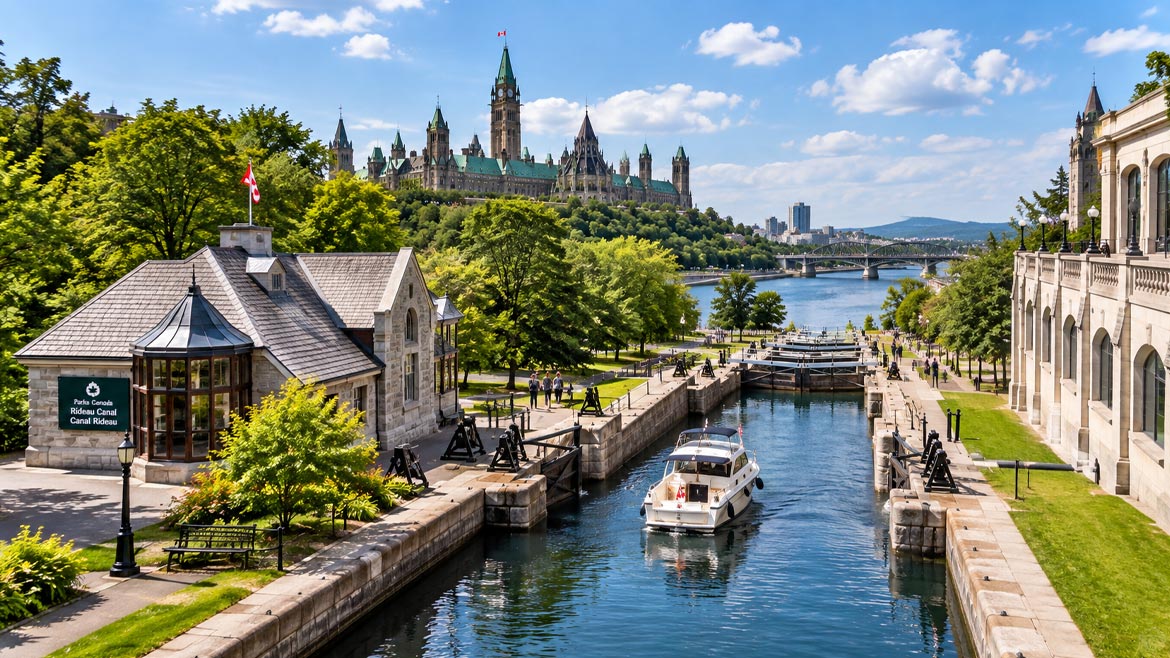
The system has 47 locks, including two on the Tay Canal, spread across 24 lockstations. Parks Canada staff operate the lockstations during navigation season, allowing vessels to move between sections of the waterway with different water levels.
The Rideau Canal’s UNESCO designation is another important part of its history. UNESCO describes it as the best-preserved example of a slackwater canal in North America and notes that it remains operational along its original route, with most of its original structures intact.
Why the Canal Matters in Ottawa
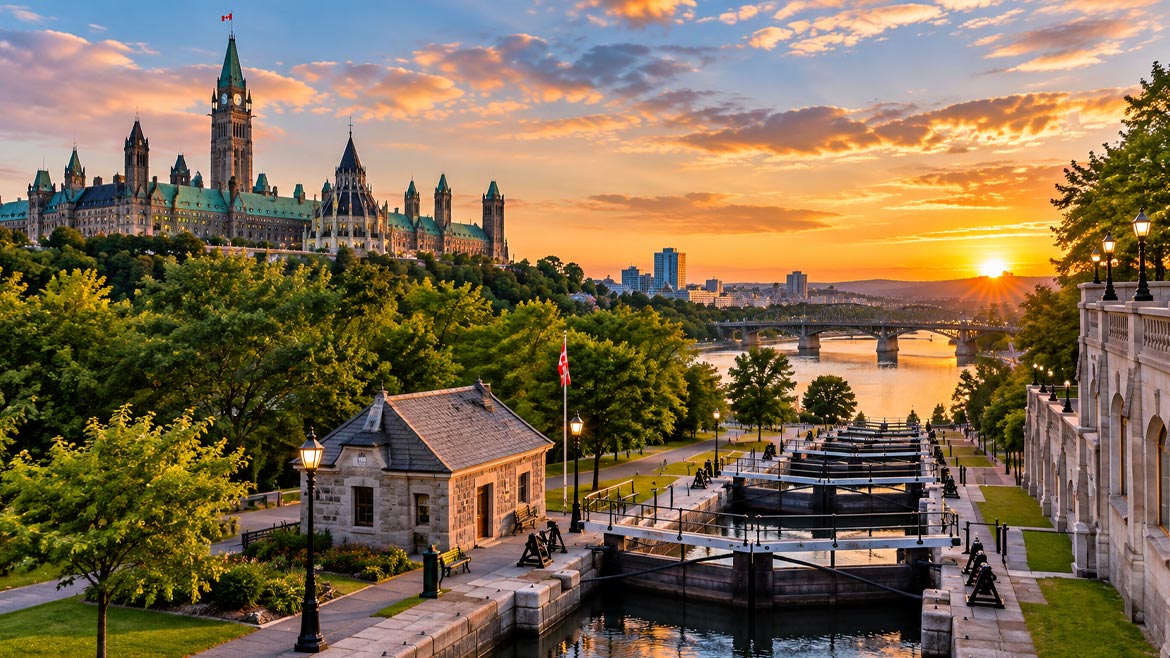
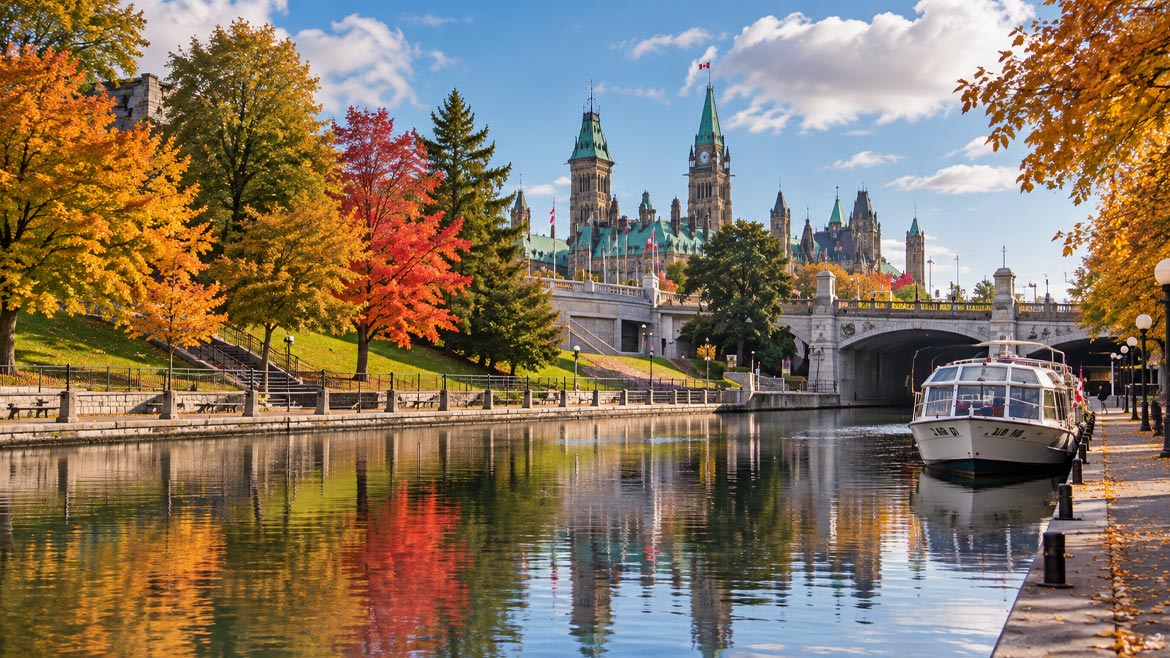
In Ottawa, the canal is woven directly into the city rather than standing apart as a conventional attraction. Its northern entrance sits beside Parliament Hill, while the waterway continues south through central neighbourhoods toward Dow’s Lake and beyond.
The Ottawa Locks are particularly important. Located at the base of Parliament Hill, the eight-lock flight connects the Ottawa River with the canal and forms the largest single set of locks on the Rideau Canal. The development of Bytown—the settlement that became Ottawa—was closely tied to the construction of the canal and the decision to establish its northern entrance at this location.
For most first-time visitors, this downtown section is the easiest introduction to the canal because it can be combined naturally with Parliament Hill, the National War Memorial, Major’s Hill Park and ByWard Market.
A common misconception is that the Rideau Canal is primarily a winter attraction. The Skateway is certainly its best-known seasonal experience, but the canal remains relevant throughout the warmer months for walking, cycling, boating and watching the historic locks in operation.
Best Time to Visit the Rideau Canal
There is no single best season for the Rideau Canal because the experience changes substantially through the year. Your ideal timing depends on whether skating, boating, active lock operations, cycling or simply seeing the canal is the priority.
Winter: Rideau Canal Skateway
In winter, the Ottawa section of the canal may become the Rideau Canal Skateway, operated by the National Capital Commission rather than Parks Canada.
When fully open, the Skateway extends 7.8 kilometres through Ottawa, from downtown to Hartwells Locks, including Dow’s Lake. The skating season typically runs from January to early March, but there are no guaranteed opening or closing dates because the ice is naturally formed and weather-dependent.
This distinction is important when planning a winter trip. Cold weather or snow alone does not mean the Skateway is open, and individual sections can open or close according to ice conditions. The 2025–2026 season, for example, began with only a 3.4-kilometre section before additional areas could open as conditions permitted.

If skating is a major reason for your Ottawa trip, check the National Capital Commission’s current Skateway status shortly before visiting rather than relying on historical opening dates.
When sections are officially open, access to the Skateway itself is free. Entrances are available at numerous points, including locations near downtown, uOttawa, Lansdowne and Dow’s Lake. Some entrances have universal access ramps, while rentals, washrooms and other services vary by location and season.
Spring and Summer: Locks, Boats and Pathways
For travellers interested in seeing the Rideau Canal functioning as a navigable waterway, late spring and summer are the most straightforward seasons.
Parks Canada’s navigation season generally runs from mid-May to mid-October. In 2026, staffed lockstation operations began on May 15 and are scheduled to continue through October 12, with operating hours varying by period and day of the week. Parks Canada also cautions that first and last lockages are not guaranteed because water management, maintenance and navigation interruptions can affect operations.
Summer is particularly suitable for combining several canal experiences in one day: walking beside the water, watching boats move through the Ottawa Locks, cycling farther south and, when available, joining a sightseeing cruise.
July through mid-August is considered the peak navigation period on the canal, so boat traffic is generally more active during this part of the season.
Fall: Quieter Walks and Autumn Scenery
Early autumn offers a different experience. Temperatures are generally more comfortable for longer walks and bike rides, and the canal corridor provides easy access to parks and established pathways.
The main limitation is the navigation calendar. Lockstation hours are reduced later in the season, and navigation eventually closes for winter. In 2026, reduced fall hours apply from September 8 until the scheduled end of the navigation season on October 12.
If seeing boats pass through operating locks is important, check current hours before setting out. If your priority is walking, photography or incorporating the canal into general Ottawa sightseeing, autumn can still be an excellent time to visit.
Best Ways to Experience the Rideau Canal
You do not need to travel the full 202 kilometres to appreciate the Rideau Canal. Most visitors to Ottawa experience a relatively short urban section, and the best approach depends on how much time you have.
Walking Along the Canal
Walking is one of the easiest ways to experience the canal on a first visit because it passes directly through central Ottawa.
A practical starting point is the Ottawa Locks. From here, you can explore the northern entrance to the canal before continuing into downtown or following pathways south alongside the water.
For a short visit, focus on the area around the Ottawa Locks and the downtown canal. With more time, continue south toward the Glebe and Dow’s Lake. This gives a better sense of how the canal transitions from a historic downtown landmark into a recreational corridor through residential neighbourhoods and parkland.
In winter, some multi-use pathways beside the canal are cleared of snow even when skating conditions are unsuitable. The NCC identifies cleared sections along both the eastern and western sides of the canal, although winter conditions and maintenance can still affect individual routes.
Cycling Beside the Rideau Canal
Cycling allows you to cover more of the Ottawa section than you could comfortably explore on foot.
The Rideau Canal pathways connect with the broader Capital Pathway network, including routes that link the Rideau River and Rideau Canal corridors over approximately 24 kilometres.
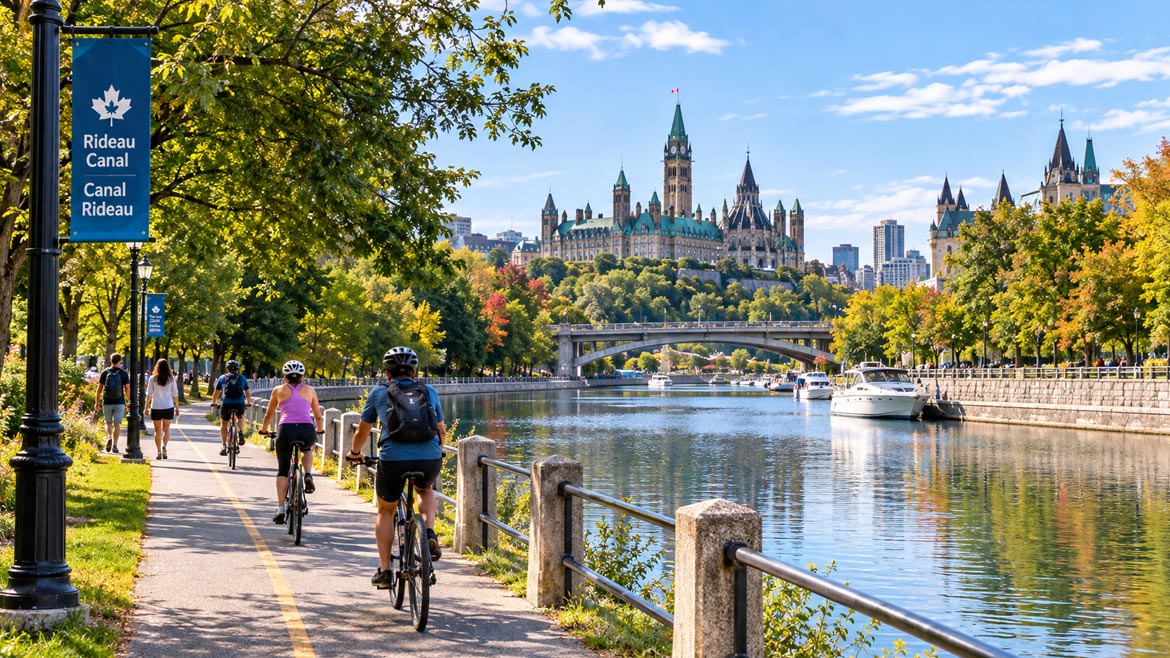
Cyclists should remember that these are multi-use environments. Pedestrians, runners, cyclists, in-line skaters and people using mobility devices may share the pathways, so speeds should be appropriate for conditions and busier areas.
For casual visitors, cycling from central Ottawa toward Dow’s Lake is a manageable way to see more of the canal without committing to a long-distance route.
Taking a Rideau Canal Cruise
A sightseeing cruise is a convenient way to see the canal from the water while learning more about its history and surrounding landmarks.
Cruise routes, departure points, operating periods, durations and accessibility vary by operator. They are also separate from Parks Canada’s lockage services. A canal cruise in Ottawa should not be confused with navigating the entire Rideau Canal between Ottawa and Kingston.
If a cruise is central to your plans, check the operator’s current route and schedule before booking. Seasonal operations and waterway conditions can affect availability.
Paddling or Travelling by Private Boat
Canoes, kayaks and recreational boats can use the Rideau Canal during the navigation season, subject to Parks Canada’s navigation rules, permits and operational conditions.
Boaters and paddlers travelling through locks require the appropriate lockage permit, while a separate permit is required for overnight mooring. Parks Canada offers different lockage and mooring permits depending on your journey.
Travelling the entire canal is a substantially different undertaking from visiting it as an Ottawa attraction. Parks Canada estimates approximately three to five days for a one-way journey through the full system, although actual timing depends on the vessel, route, lockages and travel style.
Rideau Canal Locks: What Visitors Should Know
The locks are one of the most interesting parts of the Rideau Canal because they make its engineering easy to see. You do not need to be travelling by boat to watch them operate.
How the Rideau Canal Locks Work
A lock allows a vessel to move between two sections of water at different elevations.
A boat enters the lock chamber and the gates are closed. Water is then admitted into or released from the chamber, gradually raising or lowering the vessel until its level matches the water on the other side. Once the levels align, the opposite gates can be opened and the boat continues its journey.
Part of the canal’s appeal is that many of these historic engineering works remain in active use rather than functioning solely as preserved exhibits.
Ottawa Locks
For travellers staying in central Ottawa, the Ottawa Locks are the most convenient place to see the system.
The lockstation consists of eight locks arranged in a flight, with a total lift of approximately 24.1 metres between the Ottawa River and the canal. It sits at the base of Parliament Hill and close to several of the city’s major visitor areas.
Because of its location, you can visit without dedicating an entire day to the canal. A stop here can fit naturally before or after Parliament Hill, ByWard Market or a walk through Major’s Hill Park.
Seeing a boat pass through the entire lock flight can take time, however, and boat movements are not staged for sightseeing. If watching active lockage is important, visit during navigation season and check current operating information beforehand.
Lockstations Beyond Downtown Ottawa
Travellers with a car and more time can use the canal as a route for exploring Eastern Ontario beyond central Ottawa.
The Rideau Canal’s 22 lockstations are accessible by road, although facilities differ from one site to another. Lockstations may include green space, historic buildings, washrooms, picnic areas, camping or other visitor services depending on the location.
Locations such as Merrickville, Smiths Falls, Jones Falls and Kingston Mills offer a very different setting from the urban Ottawa section. They are particularly relevant for travellers interested in the canal’s engineering, heritage landscapes or a road trip between Ottawa and Kingston.
Dow’s Lake, by contrast, is an important recreational area along the Ottawa section of the canal but is not itself one of the Rideau Canal lockstations.
How to Get to the Rideau Canal in Ottawa
Because the canal runs through central Ottawa, there is no single visitor entrance. The best access point depends on which part of the waterway you want to see.
Downtown and Ottawa Locks
For a first visit, the northern end of the canal is usually the most convenient starting point. The Ottawa Locks are located at 3 Canal Lane, below Parliament Hill and beside the historic core of the city.
From this area, it is easy to continue on foot to Parliament Hill, ByWard Market, Major’s Hill Park and other central attractions.
Public transit is generally more convenient than driving if you are staying elsewhere in central Ottawa, particularly when your visit is part of a wider day of downtown sightseeing.
Dow’s Lake and the Southern Urban Section
Dow’s Lake is a useful alternative starting point if your priority is recreation rather than the historic downtown locks.
The area connects with canal-side pathways and provides access to neighbourhoods such as the Glebe and Little Italy. It also sits along the winter Skateway route when that section is officially open.
Rather than trying to cover every part of the urban canal, choose the access point that fits the rest of your itinerary. Downtown works best for history and major attractions; Dow’s Lake is better suited to longer walks, cycling and a more recreational experience.
Rideau Canal Fees and Tickets
There is no general admission ticket simply to see the Rideau Canal or visit the Ottawa Locks on foot. Costs become relevant when you add activities such as cruises, rentals, lockage, mooring or other paid services.
Lockage and Boating Fees
Boaters normally require permits to pass through the locks, and overnight mooring has its own permit requirements. Parks Canada offers several lockage options, including 1-day, 6-day, one-way transit and seasonal permits.
Fees and temporary programs can change between seasons. In 2026, free lockage was available from June 19 to September 7, with regular fees resuming on September 8.
Boaters should therefore check current Parks Canada information rather than relying on older travel articles.
Skating Costs
Access to the Rideau Canal Skateway is free when the Skateway is officially open. Equipment rental, food and other services are separate paid expenses.
Because skating conditions can change quickly, confirm both the open sections and available services before travelling specifically for the Skateway.
Accessibility Along the Rideau Canal
Accessibility varies considerably because the Rideau Canal is a 202-kilometre historic site rather than a single modern attraction.
In Ottawa, paved urban pathways and selected Skateway access points can make some sections easier to navigate, while historic lockstations, uneven surfaces, slopes and seasonal conditions may present additional barriers.
Parks Canada advises visitors who require accessibility assistance at Rideau Canal sites to contact its operations staff so that specific needs and available accommodations can be discussed.
During Skateway season, the NCC identifies universal access ramps and accessible facilities on its current map. However, ice conditions and the natural surface of the Skateway should also be considered when deciding whether skating is suitable.
Travellers with mobility requirements should therefore plan around a specific canal section rather than assuming accessibility is consistent along the entire route.
How Long Should You Spend at the Rideau Canal?
The right amount of time depends on what you want to do. Unlike an enclosed attraction, the Rideau Canal can take anywhere from half an hour to several days to experience.
For most Ottawa visitors, these time frames are practical:
- 30–60 minutes: Visit the Ottawa Locks and walk around the northern entrance to the canal.
- 1–2 hours: Combine the locks with a longer canal-side walk through central Ottawa.
- 2–4 hours: Walk or cycle toward neighbourhoods farther south, spend time around Dow’s Lake or add a seasonal activity.
- Half a day: Combine a substantial canal route with nearby Ottawa attractions or a sightseeing cruise.
- Multiple days: Explore the broader Rideau corridor between Ottawa and Kingston by road or boat.
There is little benefit in trying to cover a large distance simply to say you have seen more of the canal. For a first visit, a well-chosen section usually provides a better experience.
Combining the Rideau Canal with an Ottawa Itinerary
One of the canal’s advantages is its proximity to several major Ottawa attractions. It works particularly well as part of a walking day rather than as an isolated sightseeing stop.
Parliament Hill and the Ottawa Locks
Parliament Hill and the Ottawa Locks are an obvious pairing because they sit beside one another.
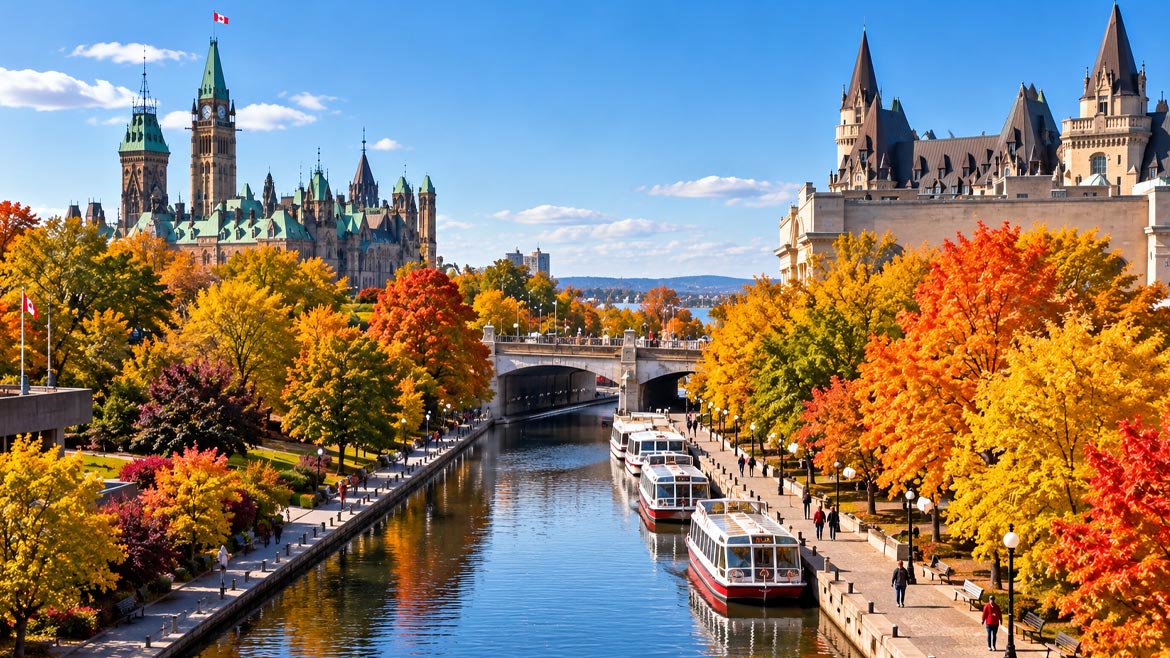
You can explore the parliamentary precinct and then descend toward the canal to see the eight-lock flight and the point where the Rideau Canal meets the Ottawa River.
This combination provides useful historical context: the canal was not added to an established capital city. Construction of the waterway helped drive the development of Bytown, which later became Ottawa.
ByWard Market and Major’s Hill Park
From the Ottawa Locks, ByWard Market and Major’s Hill Park are also nearby.
This makes it possible to combine heritage, city views, dining and the canal without unnecessary transportation between attractions. For visitors with only one day in Ottawa, this is usually more efficient than making a separate trip to the canal later.
Dow’s Lake and the Glebe
Travellers interested in a longer canal experience can continue south toward the Glebe and Dow’s Lake.
This section feels less monumental than the area beside Parliament Hill, but it gives a clearer sense of the canal as part of everyday Ottawa. It is particularly suitable for walking and cycling and becomes an important access area during Skateway season.
Exploring the Rideau Canal Beyond Ottawa
The downtown Ottawa section is only the beginning of the Rideau Canal. Travellers with more time can follow the waterway through Eastern Ontario toward Kingston.
The character changes considerably outside the capital. Urban pathways give way to lakes, rivers, rural landscapes, historic communities and smaller lockstations.
Smiths Falls and Merrickville
Smiths Falls is an important community along the central portion of the canal and can serve as a useful stop for travellers exploring the waterway by road.
Merrickville combines a historic lockstation with a compact village setting, making it an accessible choice for travellers who want to experience the Rideau corridor beyond Ottawa without navigating the entire route.
Jones Falls and Kingston Mills
Farther south, Jones Falls is one of the canal’s major engineering sites. Its system includes four locks and the historic stone arch dam constructed as part of the original canal works.
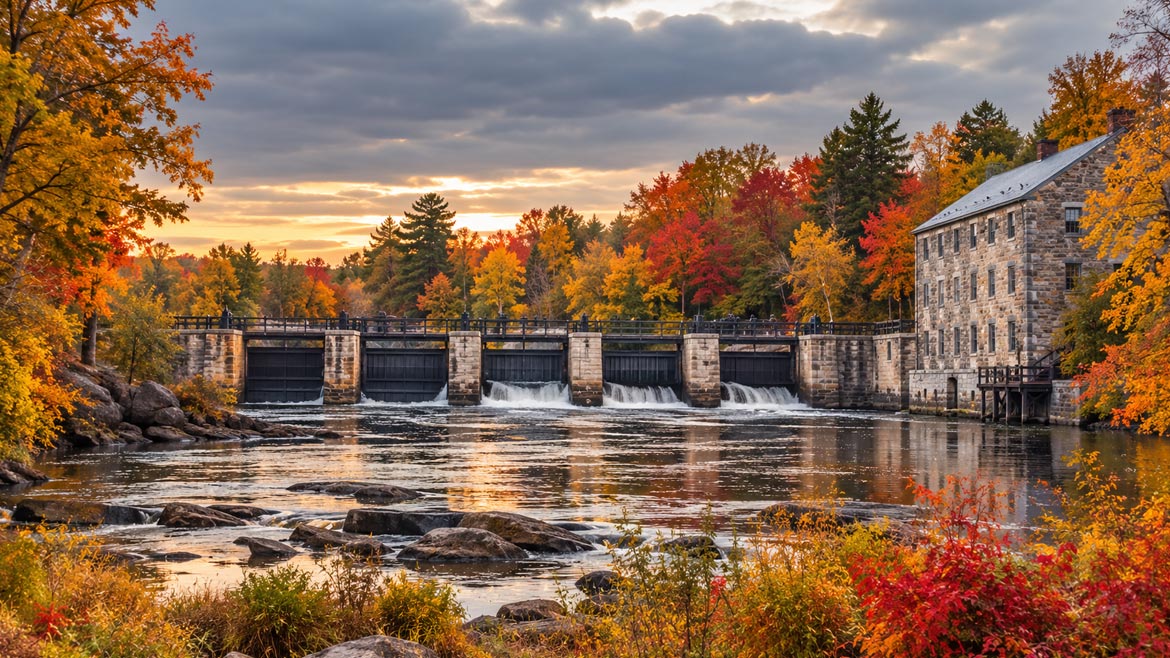
Kingston Mills, near the southern end of the system, provides another opportunity to see historic canal infrastructure before reaching Kingston and Lake Ontario.
A road trip between Ottawa and Kingston can therefore use the Rideau Canal as a route theme rather than treating the waterway as a single attraction.
Self-Guided Visit or Planned Rideau Canal Experience?
The central Ottawa section is easy to explore independently, and travellers should not assume they need a guided tour simply to see the canal.
The value of additional planning increases when the canal is tied to seasonal activities, a cruise, multiple lockstations or a wider Eastern Ontario itinerary.
| Aspect | Self-Guided Visit | Planned Experience |
| Best for | Flexible downtown sightseeing | Travellers coordinating several attractions or destinations |
| Timing | You manage seasonal schedules and operating hours | Timing can be coordinated with the wider itinerary |
| Transportation | Straightforward in central Ottawa | More useful when travelling beyond Ottawa |
| Canal experience | Walking, cycling and independent lock viewing | Can incorporate cruises, transportation and other activities where available |
| Flexibility | Highest day-to-day flexibility | Better for travellers who prefer arrangements made in advance |
| Research required | You check current operations yourself | Key logistics can be incorporated into trip planning |
For a short downtown visit, self-guided exploration is usually sufficient. If you are trying to coordinate Ottawa with Kingston, multiple Rideau Canal communities, accommodation and transportation, advance itinerary planning becomes more useful.
Planning the Rideau Canal with Alaedin Travel Canada
The Rideau Canal is straightforward to see in central Ottawa, but its seasonal nature makes itinerary design more important when a specific experience—such as skating, boating or seeing active locks—is a priority.
Alaedin Travel Canada can incorporate the Rideau Canal into a broader Ottawa or Eastern Canada itinerary alongside accommodation, transportation and other sightseeing arrangements.
For a short Ottawa stay, the canal can be positioned around Parliament Hill, ByWard Market and other central attractions without unnecessary backtracking. Travellers with more time can extend the itinerary toward communities along the Rideau corridor or continue to Kingston as part of a wider Ontario journey.
The key is to plan around what is actually operating during your travel dates. The Skateway is weather-dependent, lockstation hours are seasonal and cruises and recreational services have their own operating calendars. Checking those elements before finalizing the itinerary is more useful than treating the canal as the same attraction year-round.
Rideau Canal Visitor Tips
A little preparation is enough for most visitors, but the canal’s changing seasons make a few details particularly important.
- Check current conditions before a winter visit. Never assume the canal is safe for skating unless the NCC has officially opened that section of the Skateway.
- Check Parks Canada lockstation hours if seeing active lock operations is a priority.
- Start at the Ottawa Locks if you have limited time and want the strongest combination of history and location.
- Choose Dow’s Lake or a longer canal pathway if walking or cycling is more important than historic interpretation.
- Allow extra time if you want to watch boats pass through locks; lockage is an operational process rather than a scheduled visitor demonstration.
- Remember that Dow’s Lake is part of the canal corridor but is not a lockstation.
- Treat a full Ottawa-to-Kingston canal journey as a separate trip from an ordinary Ottawa sightseeing visit.
- Check current cruise routes, rental availability and activity prices directly before booking because seasonal services can change.

Is the Rideau Canal Worth Visiting?
Yes, particularly because visiting the Rideau Canal does not require a large detour from the main sights of Ottawa.
The Ottawa Locks provide the strongest introduction for travellers interested in history and engineering, while the canal-side pathways make it easy to incorporate the waterway into a longer walk or cycling route. Summer brings navigation and active locks; autumn works well for quieter exploration; and winter can provide the distinctive Skateway experience when conditions permit.
The most important planning decision is therefore not whether to visit, but which part of the canal fits your season and itinerary. For many first-time visitors, starting at the Ottawa Locks and connecting the canal with Parliament Hill and the surrounding historic centre is enough. Travellers who want to understand the waterway more fully can follow it beyond Ottawa through Eastern Ontario toward Kingston.
Frequently Asked Questions About the Rideau Canal
These answers cover the practical questions travellers most often need to resolve before including the Rideau Canal in an Ottawa or Eastern Ontario itinerary.
Where is the Rideau Canal?
The Rideau Canal runs approximately 202 kilometres through Eastern Ontario between the Ottawa River in Ottawa and Lake Ontario at Kingston. The most frequently visited urban section passes through central Ottawa.
Is the Rideau Canal a UNESCO World Heritage Site?
Yes. The Rideau Canal was inscribed on the UNESCO World Heritage List in 2007 because of its historical significance, engineering and exceptional preservation as an operational early 19th-century canal.
Is the Rideau Canal free to visit?
There is no general admission fee to walk beside the canal or visit the Ottawa Locks on foot. Specific activities, including cruises, rentals, lockage, mooring and some other services, may have fees.
When is the Rideau Canal Skateway open?
There are no guaranteed annual opening dates. The skating season typically runs from January to early March, but the Skateway opens only when the NCC determines that ice conditions are safe.
How long is the Rideau Canal Skateway?
When the entire route is open, the Rideau Canal Skateway extends 7.8 kilometres through Ottawa, including Dow’s Lake and continuing to Hartwells Locks.
Do you have to pay to skate on the Rideau Canal?
No. Access to officially open sections of the Rideau Canal Skateway is free. Skate rentals and other services cost extra.
Can you walk along the Rideau Canal?
Yes. Ottawa has multi-use pathways along substantial sections of the canal, making walking one of the easiest ways to experience it. Winter pathway conditions differ from summer conditions, so check current information if travelling during snowy or icy weather.
Can you cycle along the Rideau Canal?
Yes. Canal-side routes form part of Ottawa-Gatineau’s wider Capital Pathway network. Because these are shared pathways, cyclists should follow posted rules and give appropriate space to other users.
Are there boat cruises on the Rideau Canal?
Seasonal sightseeing cruises operate on the Ottawa section of the canal, but routes and schedules vary by operator and year. Check current departure points, operating dates and accessibility information before booking.
When do the Rideau Canal locks operate?
The navigation season generally runs from May to October. In 2026, staffed lockstation operations are scheduled from May 15 through October 12, with different hours during spring, summer and autumn. Operational interruptions can occur, so current Parks Canada information should be checked before visiting specifically to see lockages.
How many locks are on the Rideau Canal?
The Rideau Canal has 47 locks across 24 lockstations, including two on the Tay Canal.
Which Rideau Canal lockstation is best for first-time visitors?
For visitors staying in Ottawa, the Ottawa Locks are usually the most convenient choice. The eight-lock flight sits at the base of Parliament Hill and close to several major downtown attractions.
Is Dow’s Lake a Rideau Canal lockstation?
No. Dow’s Lake is part of Ottawa’s Rideau Canal corridor and an important recreation area, but it is not one of the canal’s lockstations.
How long should I spend at the Rideau Canal in Ottawa?
Allow around one hour for the Ottawa Locks and nearby canal area. Two to four hours is more comfortable if you want to add a longer walk, cycling, or time at Dow’s Lake. A cruise or broader canal itinerary may require half a day or longer.
Can you travel the entire Rideau Canal from Ottawa to Kingston?
Yes, during navigation season it is possible to travel the canal by suitable recreational vessel. Parks Canada estimates roughly three to five days for a one-way journey through the full system, although actual travel time varies.
Is the Rideau Canal accessible for travellers with mobility requirements?
Accessibility varies by location. Some urban pathways and Skateway entrances provide accessible options, while historic surfaces, slopes and individual lockstations differ. Travellers with specific requirements should review accessibility for the exact location they intend to visit and contact Parks Canada when assistance is needed.
Can I visit the Rideau Canal outside navigation season?
Yes, particularly in Ottawa, where the canal remains part of the city landscape and adjacent pathways can still be used according to seasonal conditions. However, staffed lock operations and boating are seasonal, and winter conditions can affect pathways and access.
What attractions can I combine with the Rideau Canal in Ottawa?
Parliament Hill, Major’s Hill Park and ByWard Market are convenient additions to a visit to the Ottawa Locks. Travellers following the canal farther south can instead combine it with the Glebe and Dow’s Lake.
Can you kayak or canoe on the Rideau Canal?
Yes. Canoes and kayaks can use the Rideau Canal during the navigation season. A lockage permit is required to pass through the locks, while portaging is available at many lockstations.
Tours

Eastern Canada Tour – 7 Days / 6 Nights
$950.00 /starting at

Eastern Canada Tour – 9 Days / 8 Nights
$1,790.00 /starting at
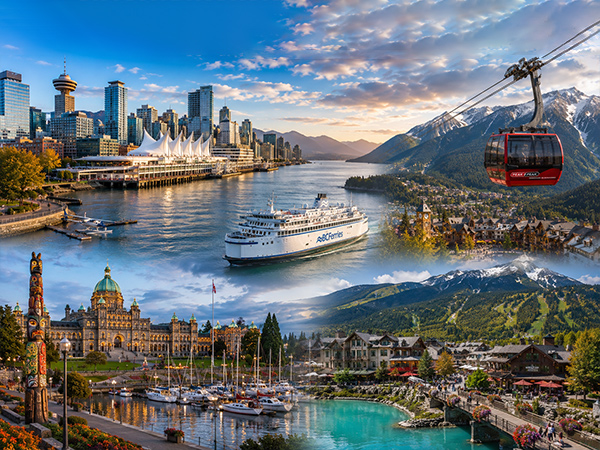
Vancouver Victoria Whistler Tour – 5 Days / 4 Nights
$2,990.00 /starting at

Banff, Lake Louise & Canadian Rockies Tour – 4 Days / 3 Nights
$2,990.00 /starting at

Quebec, Montreal & Ottawa 5-Day Tour – 5 Days / 4 Nights
$1,199.00 /starting at
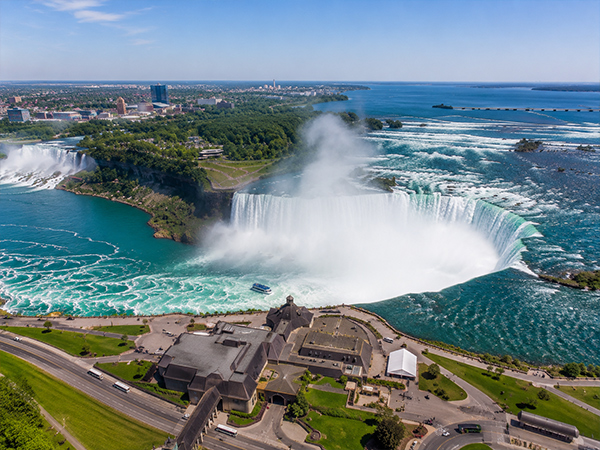
Niagara Falls One-Day Tour
$ /starting at
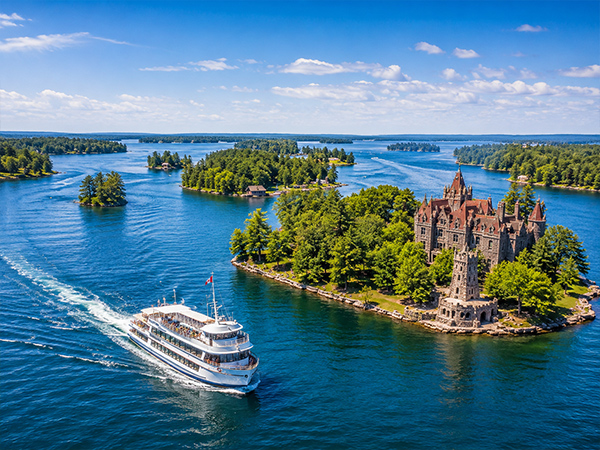
1000 Islands One-Day Tour
$ /starting at