
Peggy’s Cove Travel Guide: Parking, Safety and Best Times to Visit
Peggy’s Cove Travel Guide: Parking, Safety and Best Times to Visit
Peggy’s Cove is easy to reach from Halifax, but its exposed Atlantic setting rewards careful planning. Crowds, limited parking, fog, wind and unpredictable waves can all change the experience within a few hours.
The village is a living coastal community rather than a conventional ticketed attraction. A thoughtful visit includes more than Peggy’s Point Lighthouse: the accessible viewing deck, working harbour, granite shoreline, local galleries and small businesses all contribute to the character of the place.
Most visitors spend one to two hours here. Allowing two to three hours creates time for photography, a meal and a respectful walk through the village without rushing.
Why Peggy’s Cove Is Worth Visiting
Peggy’s Cove brings together maritime history, a working fishing harbour and one of Canada’s most recognizable coastal landmarks. Its appeal comes from the relationship between the lighthouse, exposed granite and the community around the narrow cove.
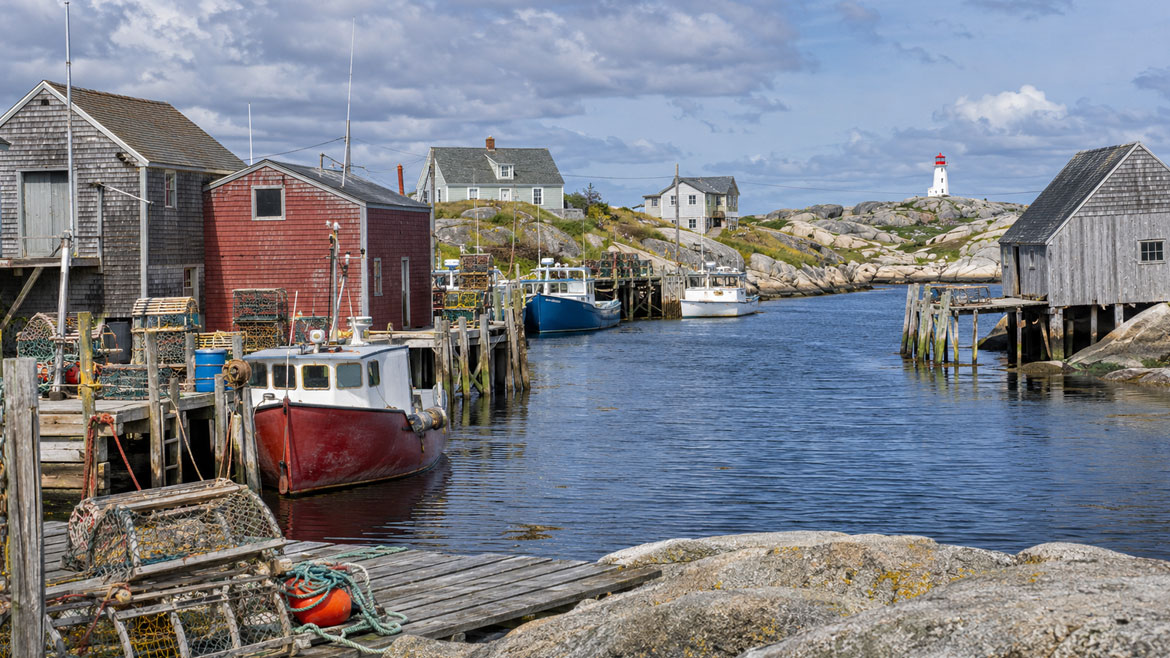
Peggy’s Point Lighthouse and Maritime History
A light was first established at Peggy’s Point in 1868. The present octagonal concrete lighthouse was completed in 1915 and replaced the earlier wooden structure.
Peggy’s Point Lighthouse is a Classified Federal Heritage Building and remains listed as an active aid to navigation. Its white tower and red lantern mark the eastern entrance to St. Margaret’s Bay.
The visitor experience centres on exterior views. The lighthouse is best appreciated from the accessible viewing deck and surrounding public viewpoints rather than as an interior attraction.
A Working Fishing Village
Peggy’s Cove is not simply a scenic set built around a lighthouse. Fishing activity continues around the harbour, and many buildings are private homes or working properties.
Visitors should remain on public routes, avoid entering private yards or working wharves, and keep roads and driveways clear. Shops, galleries and restaurants add interest, but some operate seasonally or on reduced off-season schedules.
Peggy’s Cove is within Mi’kma’ki, the ancestral and traditional territory of the Mi’kmaq. Respect for the land includes protecting sensitive vegetation, following established paths and recognizing that visitors are guests in both a living community and a culturally significant region.

The Granite Coastal Landscape
The rounded granite around Peggy’s Cove is part of an ancient geological landscape exposed and reshaped by glacial movement. Waves, salt, wind and freeze-thaw cycles continue to weather its surface.
The surrounding Peggy’s Cove Preservation Area protects approximately 1,000 acres of sensitive coastal terrain. Stay on existing paths where possible and avoid trampling low vegetation while looking for alternative viewpoints.
Pro Tip
The lighthouse is the obvious photograph, but the harbour, fishing sheds, granite barrens and sheltered cove provide a more complete sense of place.
Planning Your Visit to Peggy’s Cove
The most important planning decisions are when to arrive, how to get there and whether coastal conditions are suitable. Tide information can be useful, but it must never be treated as permission to approach the water.
Best Times to Visit
Peggy’s Cove can be visited year-round. Late spring through fall offers the widest selection of nearby services, while winter visits are quieter but bring colder temperatures, stronger weather systems and reduced operating hours at some businesses and facilities.
The busiest period is generally between 11 a.m. and 3 p.m., particularly during summer and cruise season. Early mornings and later afternoons usually offer a calmer experience and better chances of finding parking.
Sunrise and evening light can be excellent for photography. However, low visitor numbers do not reduce the danger posed by waves, wind or poor visibility.

Getting There from Halifax
Peggy’s Cove is approximately an hour southwest of Halifax, depending on traffic and the starting point. Drivers normally approach via Route 333, with connections from Highway 103.
The coastal roads become narrower near the village and are shared by residents, pedestrians, tour vehicles and cyclists. Drive slowly and avoid stopping in the roadway for photographs.
There is no regular public transit service between Halifax and Peggy’s Cove. Travellers without a vehicle should reserve a guided tour or private transfer in advance and confirm the current pickup location and itinerary with the operator.
Parking and Arrival
Two public parking areas serve Peggy’s Cove on a first-come, first-served basis. Spaces may be difficult to find during peak periods even after previous parking expansions.
Follow posted signs, leave roadways unobstructed and never park on private property. Arriving before the late-morning rush or after the busiest afternoon period is usually more effective than circling through the village.
Tour passengers should confirm how much independent time is included. Short stops may provide enough time for the lighthouse but little opportunity to explore the harbour or local businesses.
Accessibility and Visitor Facilities
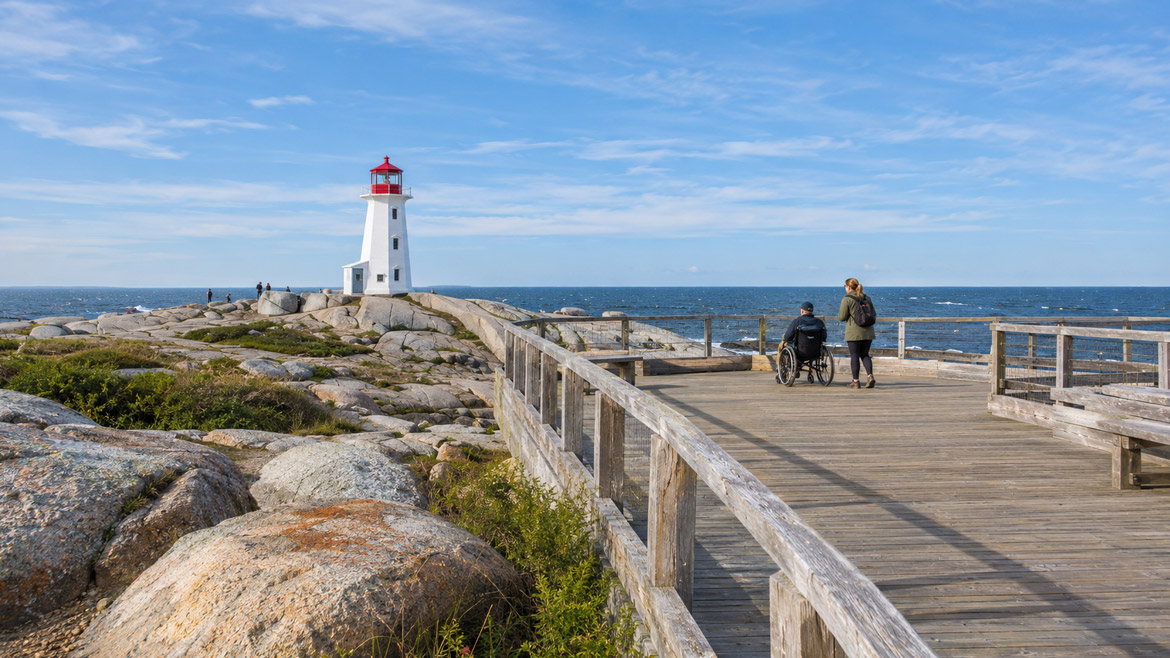
The accessible viewing deck overlooks the lighthouse and Atlantic coastline. It includes shallow ramps, handrails, landing areas and multiple viewing positions.
Accessible parking, improved pathways and wheelchair-accessible washrooms are also available. Some public washrooms operate on seasonal or reduced off-season schedules, so current hours should be checked before travelling.
The viewing deck provides a safer and more accessible viewpoint, but Peggy’s Cove remains a rugged coastal environment. Natural granite, historic roads and some village surfaces may still be difficult for visitors with limited mobility.
Coastal Safety
Sudden waves can wash across the rocks even during apparently calm weather. Dark or black rocks are usually wet and may be both slippery and within reach of breaking waves.
Stay off wet, dark rocks, remain well back from the water and never swim from the exposed shoreline. Dry white granite provides a safer walking surface, but it does not eliminate wave or fall hazards.
Use the viewing deck when conditions are uncertain and follow all closures, signs and directions from safety staff. A tide chart cannot predict rogue waves and should never override an on-site warning.
Wear footwear with reliable grip and bring wind-resistant layers. Fog, rain and falling temperatures can arrive quickly, including in summer.
Pro Tip
If waves are reaching dark rocks or throwing spray across your intended route, change viewpoints. No photograph is worth approaching an exposed edge.
Experiencing Peggy’s Cove Beyond the Lighthouse
A short lighthouse stop captures the familiar view. A longer visit reveals the harbour, community and coastal landscape that give the landmark its context.
Walking Through the Village
Follow public roads and established pedestrian routes between the lighthouse area and harbour. Fishing boats, weathered buildings and narrow inlets provide a quieter contrast to the exposed ocean frontage.
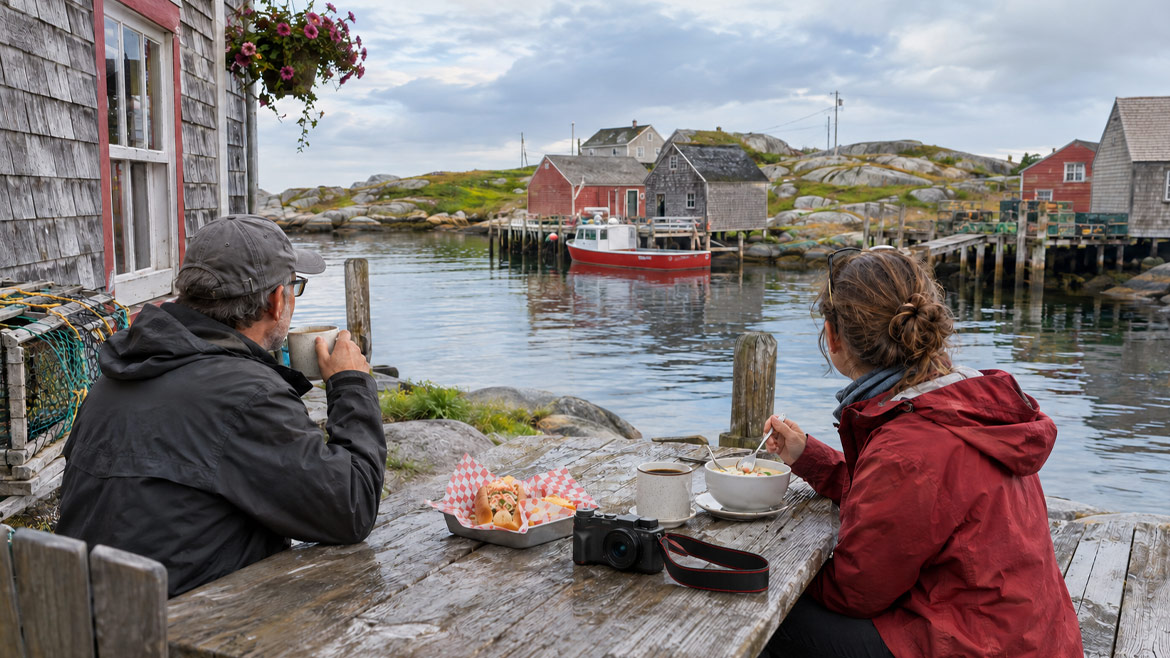
Browse local galleries and shops where open, and consider allowing time for seafood, baked goods or another regional meal. Opening days and hours can change outside the main visitor season.
Keep voices and music at a considerate level, do not photograph residents at close range without permission and avoid interfering with fishing operations.
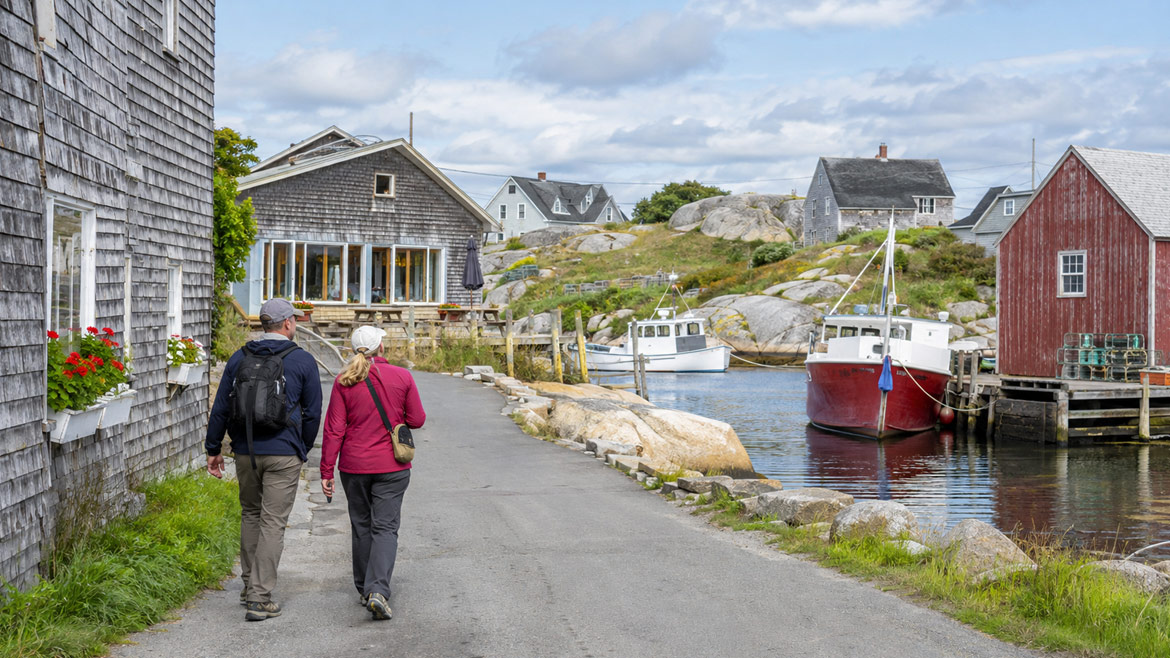
Photography Tips
Early morning and later-day light can add texture to the granite and reduce harsh reflections from the white lighthouse. Cloud, fog and changing weather may create compelling conditions, but they can also reduce visibility and make surfaces slippery.
Use public viewpoints rather than approaching the water for a clearer angle. Keep tripods out of busy paths and viewing-deck circulation areas.
Salt spray and wind can affect cameras quickly. A lens cloth, protective cover and secure camera strap are more useful here than carrying excessive equipment onto the rocks.
Guided and Self-Guided Visits
Peggy’s Cove is straightforward to explore independently when visitors have transportation and sufficient time. A self-guided visit allows more freedom for changing weather, photography and dining.
Guided tours can be valuable for travellers without a vehicle or those seeking historical and photographic context. Seasonal boat tours and guided coastal experiences may also operate in the region.
Schedules, prices and weather policies vary. Confirm what is included and whether the tour allows enough time in the village before booking.
How Long to Spend at Peggy’s Cove
One to two hours is sufficient for the lighthouse, viewing deck and a brief village walk. This is the most practical timeframe for a Halifax day trip with several stops.
Allow two to three hours if photography, galleries, dining or a slower harbour walk are priorities. Add further time during busy periods for parking and pedestrian traffic.
A visit can still be worthwhile in fog or light rain, but severe wind, large waves or site closures may require a shortened stay or a change of plans.
Adding Peggy’s Cove to a Nova Scotia Itinerary
Peggy’s Cove works well as a Halifax day trip or as the beginning of a longer journey along Nova Scotia’s South Shore. Coastal roads are scenic but slower than highway travel, so avoid scheduling too many distant stops in one day.
Nearby Places to Consider
The Swissair Flight 111 Memorial near Whalesback is a short drive from the village. It should be visited quietly and respectfully as a place of remembrance rather than treated as a casual photo stop.
St. Margaret’s Bay, Hubbards and Chester can extend a coastal drive without requiring an overly ambitious schedule. Travellers continuing farther along the Lighthouse Route can build a separate day around Mahone Bay and Lunenburg.
Kejimkujik National Park and National Historic Site belongs in a broader Nova Scotia itinerary, but it is not a quick extension of Peggy’s Cove. Pairing the two is more practical within a multi-day trip.
Practical Itinerary Checklist
Use this checklist before leaving Halifax or continuing along the South Shore:
- Check the coastal weather and local safety notices.
- Plan to arrive outside the 11 a.m.–3 p.m. peak when possible.
- Confirm guided transportation if travelling without a car.
- Wear footwear with dependable grip and bring windproof layers.
- Check seasonal hours for restaurants, galleries and washrooms.
- Allow one to two hours for a standard visit or two to three hours for a slower experience.
- Keep additional time available for coastal traffic and weather changes.

Plan Your Peggy’s Cove Visit with Alaedin Travel Canada
Alaedin Travel Canada can help arrange a Peggy’s Cove visit within a Halifax stay or a longer Nova Scotia itinerary, including appropriate transportation, realistic timing and carefully selected South Shore stops.
Plan around the coast rather than forcing the coast into a rigid schedule. Enough time for traffic, weather and an unhurried village visit will produce a safer and more memorable experience.
Tours

Eastern Canada Tour – 7 Days / 6 Nights
$950.00 /starting at
