Nahanni National Park Reserve Travel Guide: Access, Seasons and Expedition Planning
Nahanni National Park Reserve Travel Guide: Access, Seasons and Expedition Planning
Nahanni National Park Reserve does not reward casual planning. There are no public roads into the park, scheduled transportation is limited, and most overnight visitors arrive by charter aircraft before travelling through a landscape with few facilities and delayed emergency response.
A day flight to Náįlįcho (Virginia Falls) and a multi-week South Nahanni River expedition are both possible, but they require entirely different budgets, skills, reservations, equipment, and weather margins. Aircraft payloads affect packing, river levels change the difficulty of rapids, and low cloud can postpone a flight even when conditions appear reasonable at the departure point.
Fort Simpson is an important Parks Canada and charter hub, but it is not the only possible gateway. Flights may also originate in Yellowknife, Watson Lake, Muncho Lake, and other regional locations, depending on the operator and itinerary.
This guide explains how access works, when river conditions are generally most manageable, which Parks Canada procedures apply, and when a licensed guided expedition offers a meaningful safety advantage.
Why Nahanni National Park Reserve Is Unlike Other Canadian Parks
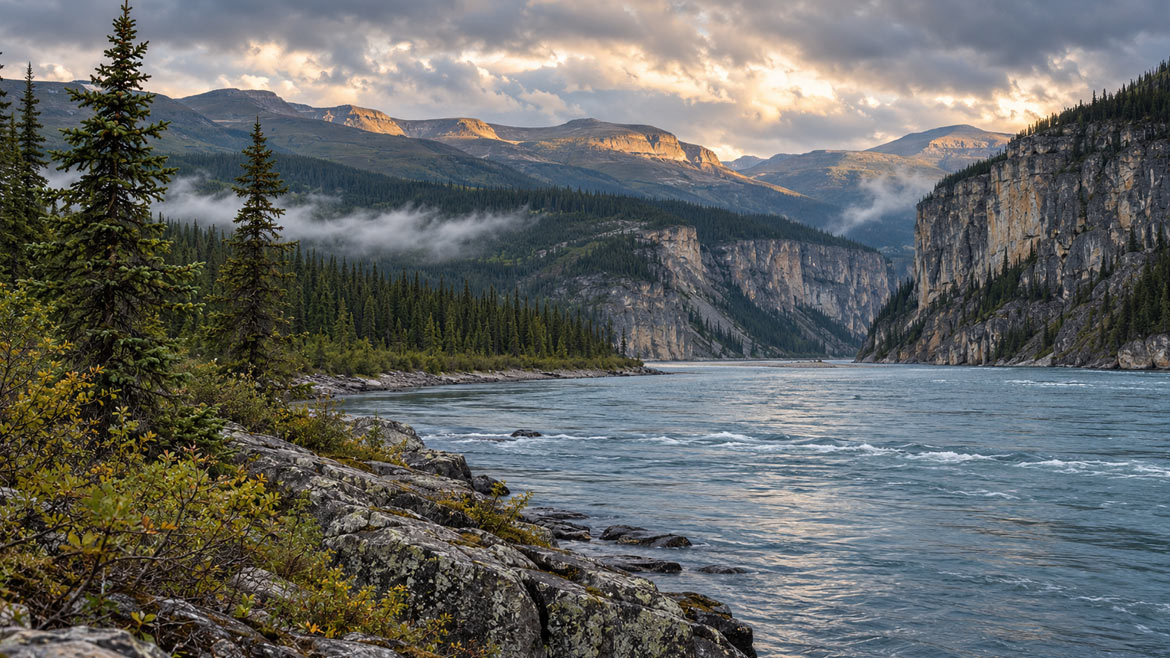
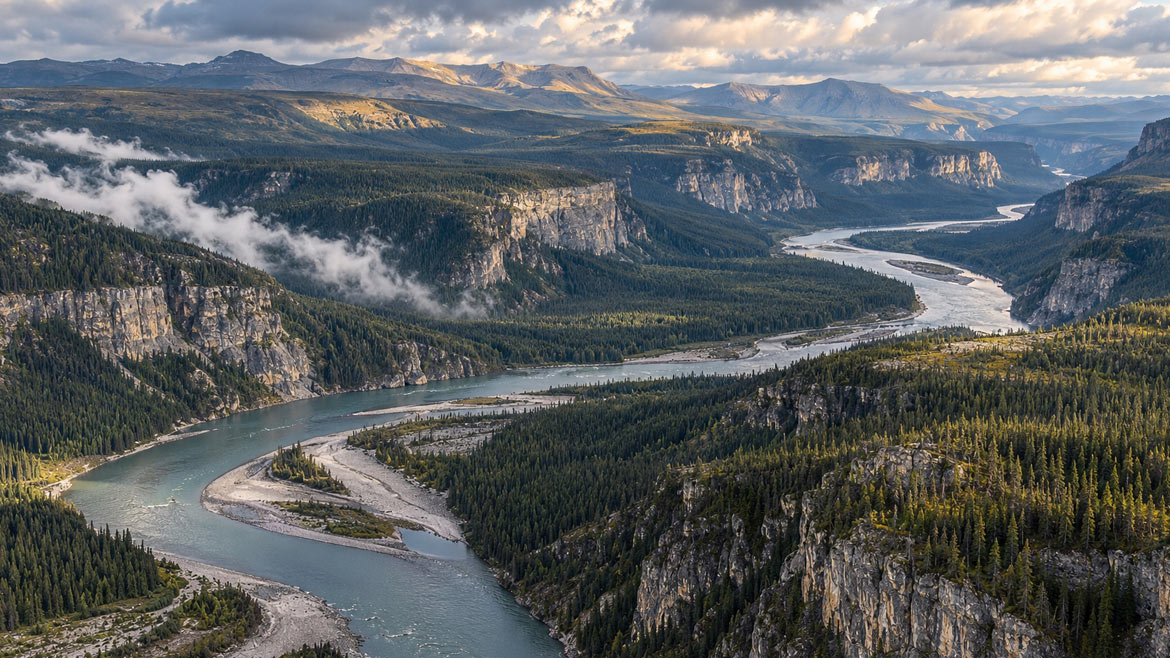
Nahanni protects a vast section of the Mackenzie Mountains in the Northwest Territories. Its central feature is Nahʔą Dehé, the South Nahanni River, which passes through mountain ranges, canyons, karst terrain, thermal springs, and Náįlįcho before eventually joining the Liard River near Tthenáágó (Nahanni Butte).
The original park was inscribed on the UNESCO World Heritage List in 1978 for its exceptional natural scenery and geological processes. The protected area is also a living Indigenous cultural landscape with deep importance to the Nahʔą Dehé Dene, Dehcho Dene, and other Indigenous rights holders.
Nahanni is cooperatively managed by Parks Canada, the Nahʔą Dehé Dene Band, and Dehcho First Nations. Visitors are entering a homeland and cultural landscape, not an empty wilderness.
Unlike Banff or Jasper, Nahanni has no drive-in viewpoints, fuel stations, conventional campgrounds, or road-accessible visitor facilities inside the park. Access normally involves a charter flight, a demanding hike, or a long river journey.
Accessibility Reality
Mistake: Treating Nahanni like a conventional national park that can be added to a spare day.
Recommendation: Choose between a day flight and a backcountry expedition before booking the rest of the Northwest Territories itinerary. Each option has a different access plan and weather exposure.
Where Nahanni National Park Reserve Is Located
The park lies in the southwestern Northwest Territories, near the Yukon and British Columbia borders. Its terrain includes the South Nahanni watershed, alpine plateaus, boreal forest, karst landscapes, and the granite peaks around the Cirque of the Unclimbables.
Fort Simpson as a Common Gateway
Fort Simpson sits near the confluence of the Liard and Mackenzie rivers and contains the main Parks Canada office for Nahanni. Several charter and tourism businesses operate from the community, making it a common staging point for day flights, river expeditions, and equipment transfers.
Travellers may use their time in Fort Simpson to:
- Complete or confirm Parks Canada procedures
- Meet their charter company or licensed outfitter
- Repack equipment to meet aircraft payload limits
- Receive current fire, bear, river, and closure information
- Wait for suitable flying conditions
Specialized supplies may be limited, so expedition equipment should be confirmed before reaching the community. An overnight stay before the outbound charter and another after the planned return can protect onward connections from weather delays.
The Role of Tthenáágó (Nahanni Butte)
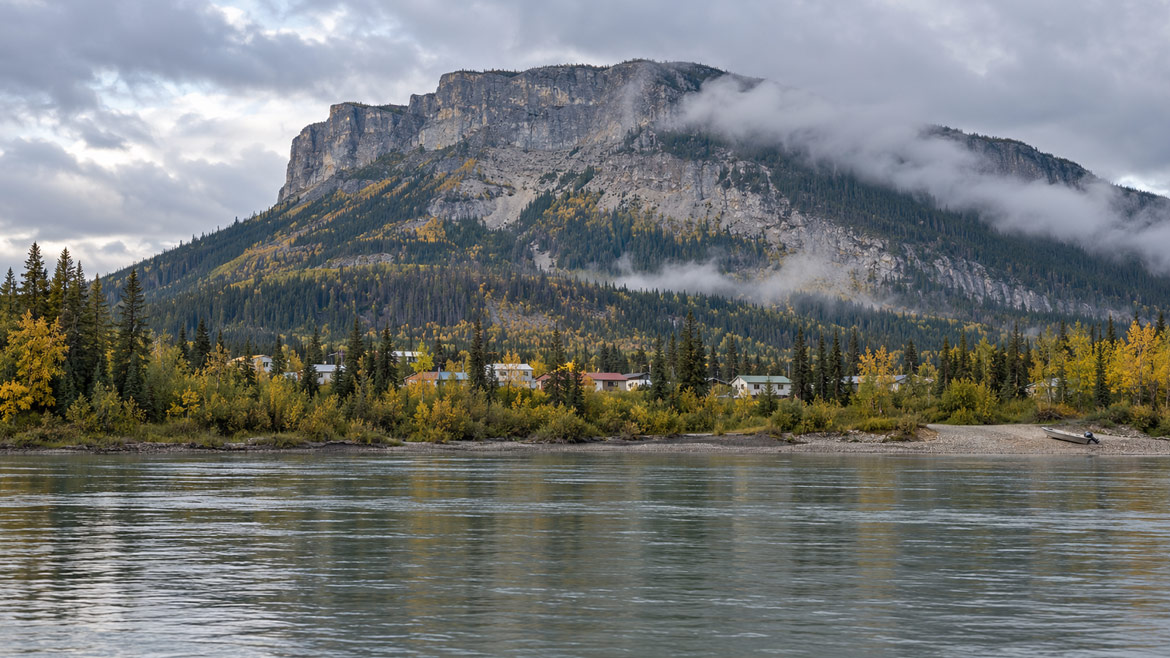
Tthenáágó is a small Dene community near the lower end of the South Nahanni River corridor. Some paddling expeditions finish in this area and arrange onward river transportation through local providers.
Parks Canada also maintains an office in the community. Travellers should organize pickups, land access, and community visits in advance rather than assuming that an unscheduled transfer will be available.
Respect for residents, private spaces, harvesting activities, and local instructions is essential. Indigenous harvesting rights continue within the park reserve and are distinct from recreational visitor access.
Other Charter Departure Points
Fort Simpson is important, but it is not the only possible departure point. Parks Canada lists charter access from communities that may include Yellowknife in the Northwest Territories, Watson Lake in Yukon, and Muncho Lake in British Columbia.
The most suitable departure point depends on the landing site, aircraft availability, payload, operator licence, and wider itinerary. A cheaper positioning flight does not necessarily produce a cheaper expedition once additional accommodation and connections are included.
Gateway Strategy
Avoid placing an essential southern connection immediately after the planned return from Nahanni. Low cloud, wind, wildfire activity, and aircraft availability can all delay extraction.
How to Get Into Nahanni National Park Reserve
Most visitors enter by chartered aircraft. Booking a flight does not replace a park reservation, registration, applicable user fees, or aircraft-access requirements.
Floatplane and Charter Aircraft Access
The majority of visitors use chartered floatplanes. Charter flights may serve day visitors, paddling groups, hikers, and climbers, depending on the aircraft and authorized landing site.
Designated landing areas include Náįlįcho, Gahnįhthah Mįe (Rabbitkettle Lake), Glacier Lake, Island Lakes, Bunny Bar, Honeymoon Lake, and Seaplane Lake. Landing elsewhere requires advance authorization from the park.
Before confirming a charter, ask the operator about:
- The exact landing and pickup locations
- Passenger and cargo payload calculations
- Canoe, raft, and equipment transport
- Baggage dimensions and packaging
- Weather-delay and cancellation policies
- Storage for luggage not entering the park
- Contingency arrangements if extraction is postponed
Payload limits vary by aircraft, weather, runway or water conditions, and operator. Do not build a packing plan around a generic weight estimate found online.
Helicopter Access
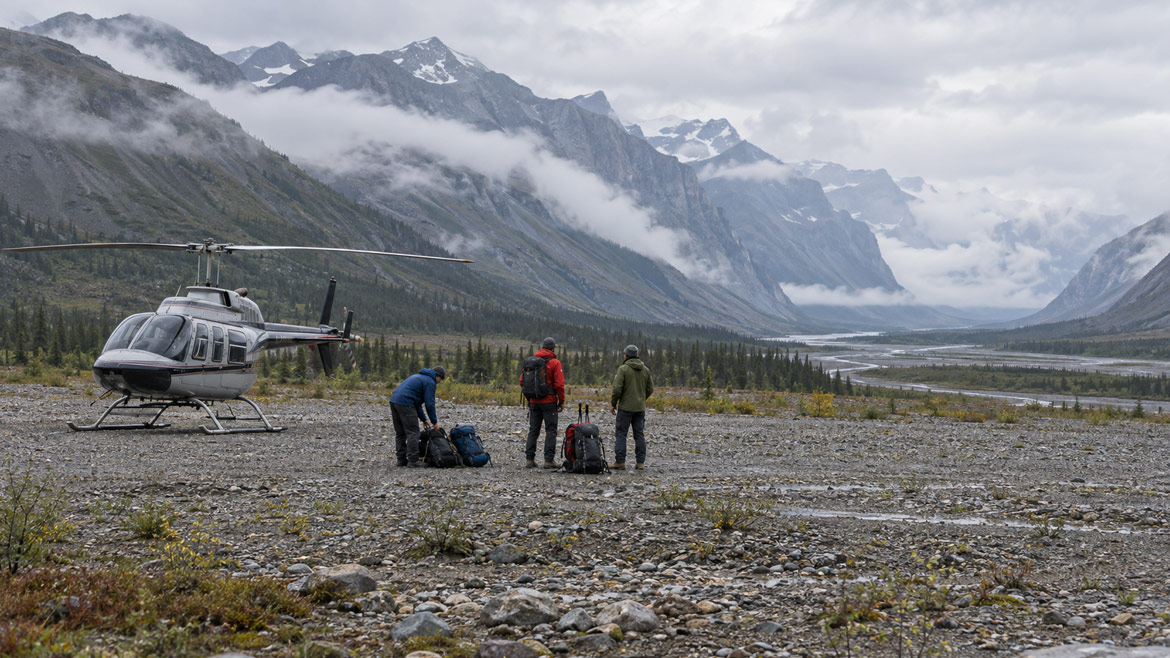
Helicopters are used for some specialized mountaineering, heli-hiking, and remote access operations, but they are not a universal shortcut into the park. Helicopter landings outside designated sites require additional authorization, and access to environmentally sensitive alpine areas may be discouraged or assessed individually.
Helicopter costs reflect aircraft time, positioning, fuel, payload, and the possibility of weather delays. Travellers considering this option should work only with a legally licensed company and confirm landing authorization directly with Parks Canada well in advance.
For most river itineraries and visits to Náįlįcho, a conventional charter arrangement is more common.
River Entry Points and Routes
Popular paddling itineraries begin at different points along the watershed. Gahnįhthah Mįe provides a shorter approach to Náįlįcho, while Island Lakes and the headwaters in Nááts’įhch’oh National Park Reserve create substantially longer expeditions.
Every paddling party must portage around Náįlįcho. Below the falls, the river passes through rapids and a series of major canyons. Rapids commonly reach Class II or III depending on water levels, but classifications alone do not communicate the consequences of cold water, isolation, and limited rescue capacity.
Recreational visitors may not operate motorboats inside the park. Motorized access provisions for Indigenous harvesting activities are separate from visitor rules.
Choosing an Entry Method
Select the route first, then choose the aircraft. The landing site should reflect paddling ability, available days, desired hiking opportunities, and the group’s capacity to manage cold-water rescue and changing river conditions.
Best Time to Visit Nahanni National Park Reserve
The main visitor season runs from June through September, but each period carries different river, weather, daylight, and access considerations. Peak visitation generally occurs from July 1 to August 15.
June and Early-Season Conditions
Snowmelt usually produces the highest river flows in early to mid-June. Faster water can shorten travel time, but it can also increase the difficulty and consequences of rapids.
June temperatures can range from below freezing to warm daytime conditions. Snow remains possible, water is extremely cold, and long daylight does not compensate for limited recovery options after a capsize.
Early-season paddling is best suited to appropriately equipped groups with strong whitewater and cold-water rescue experience.
July and August
July and August are normally the warmest months and support the largest selection of guided departures. July also tends to bring more thunderstorms and intense rainfall, which can cause rapid water-level changes and flash flooding in narrow valleys.
August typically has the most stable water levels, but it is not guaranteed to be calm or predictable. Frost can occur by late August, and water temperatures remain cold throughout summer.
Mosquitoes and blackflies can be persistent in sheltered or damp areas. Wildfire smoke is also possible, but its timing and severity cannot be predicted months in advance. Check current park bulletins, territorial fire information, and air-quality forecasts before departure.
September and Late-Season Travel
September brings shorter days, frequent freezing temperatures, and a greater chance of snow. Lower water can make some channels and upper-river routes more difficult, while narrowing daylight leaves less time for route adjustments.
Late-season trips require warm sleep systems, conservative mileage, reliable communications, and additional extraction flexibility. Aircraft and outfitter availability may also be more limited than during peak summer.
Timing Trade-Off
There is no universally perfect week. For many paddlers, August offers comparatively stable water, while June may appeal to highly experienced crews seeking higher flows. Actual river levels, weather, closures, and operator advice should determine the final decision.
Reservations, Registration and Safety Requirements
Trip reservations and registration are required for all overnight travel in Nahanni National Park Reserve. A Northern Backcountry Excursion Fee applies, and reservations are accepted on a first-come, first-served basis.
Current rules limit groups to 12 people. Capacity is restricted at several high-use or culturally significant locations. Náįlįcho has limited camping, a maximum stay of two nights, and a daily arrival allocation for private and commercial users.
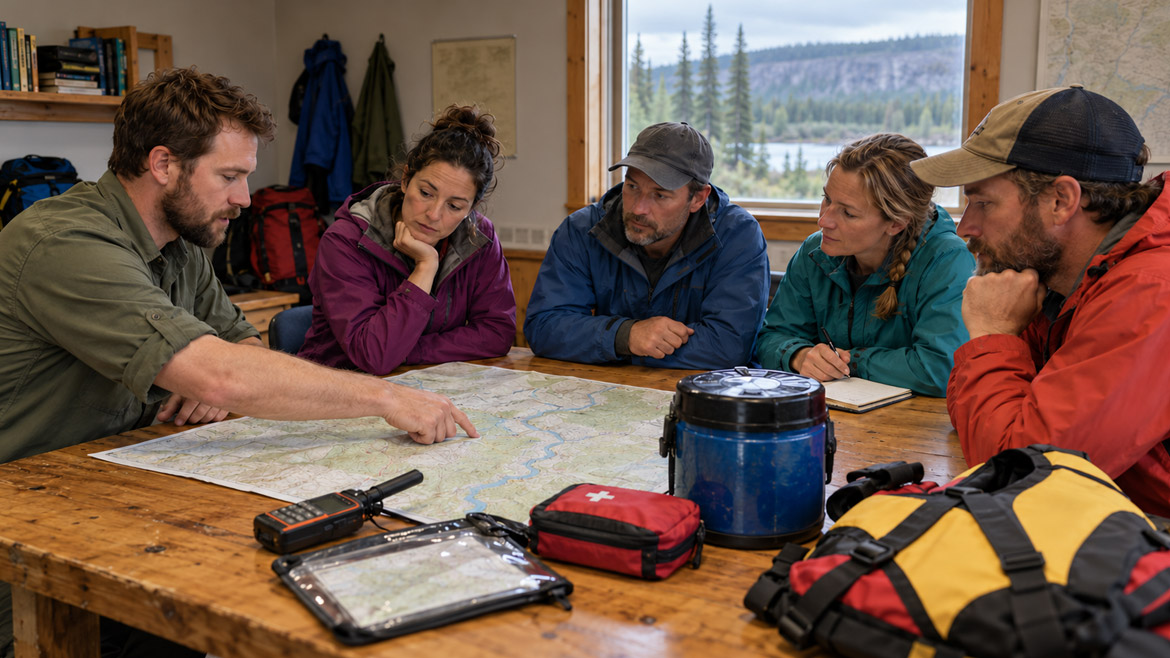
Within 24 hours before entering the park, overnight groups must register with the park office. During registration, staff confirm itinerary details and provide current information about closures, bear activity, fires, river conditions, and other hazards. Groups must also de-register after leaving the park.
Guided travellers should confirm which procedures their outfitter completes and which information each participant must provide.
Communications and Emergency Planning
Nahanni is one of North America’s most isolated park environments. Search and rescue may be delayed by weather, terrain, staff availability, or the absence of a suitable aircraft.
Each group should carry dependable satellite communication and understand that no device is infallible. A strong communications plan includes:
- A satellite communicator, satellite phone, or personal locator beacon
- Backup power and protected batteries
- Current emergency numbers
- A detailed trip plan shared with a responsible contact
- Scheduled check-in procedures
- Clear thresholds for delaying travel or requesting help
Evacuation insurance should be reviewed for remote backcountry activities, whitewater travel, charter aircraft, and exclusions related to pre-existing conditions. Coverage wording matters more than the policy’s marketing name.
River, Wildlife and Camping Safety
South Nahanni River water commonly remains cold enough for hypothermia to develop quickly after an unplanned swim. Paddlers need suitable clothing, throw bags, rescue practice, and a plan for warming a casualty.
Water levels can rise rapidly after heavy rain. Avoid low campsites near tributary mouths and riverbanks when wet weather is developing.
Both black and grizzly bears live in the park. Food, garbage, toiletries, and cooking equipment must be managed carefully. Use provided food caches where available and confirm current bear-resistant container requirements with park staff.
Evacuation Reality
Registration improves response information, but it does not create immediate rescue. Every group must be capable of managing injuries, damaged equipment, cold exposure, and extended delays independently.
What You Can Experience Inside the Park
Nahanni’s best-known features are connected by large distances and difficult terrain. Most visitors experience only a carefully selected part of the reserve rather than trying to cover every landscape.
Key experiences include:
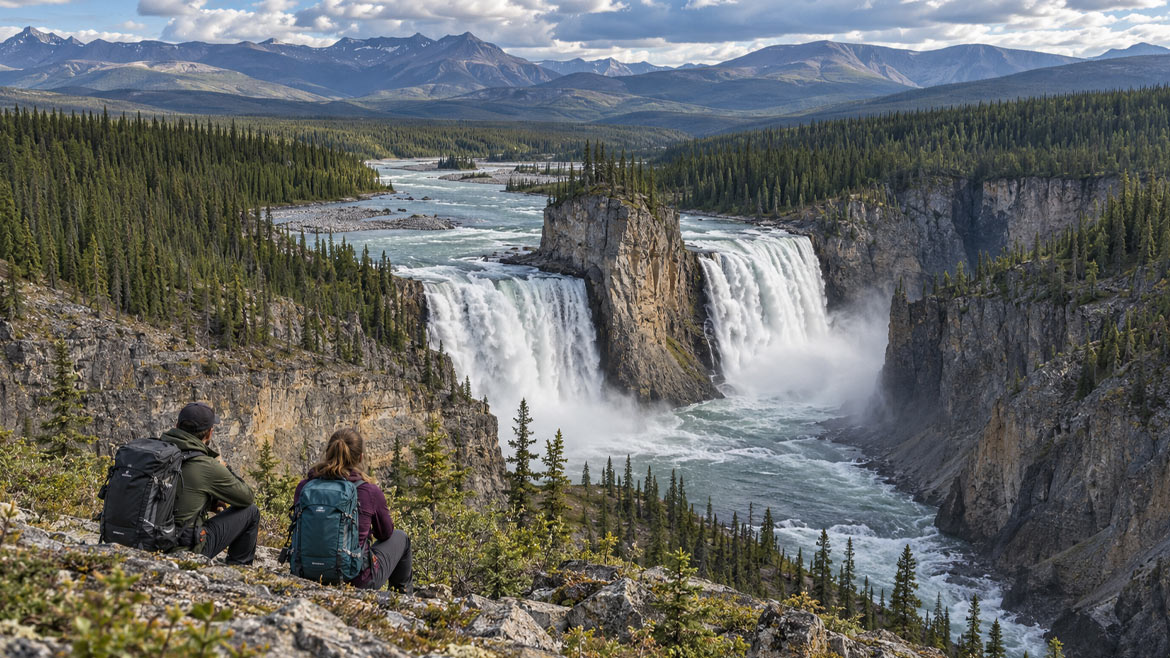
- Náįlįcho, its viewpoints, portage route, and nearby hiking
- The South Nahanni River’s major canyon systems
- The Gate and other distinctive geological formations
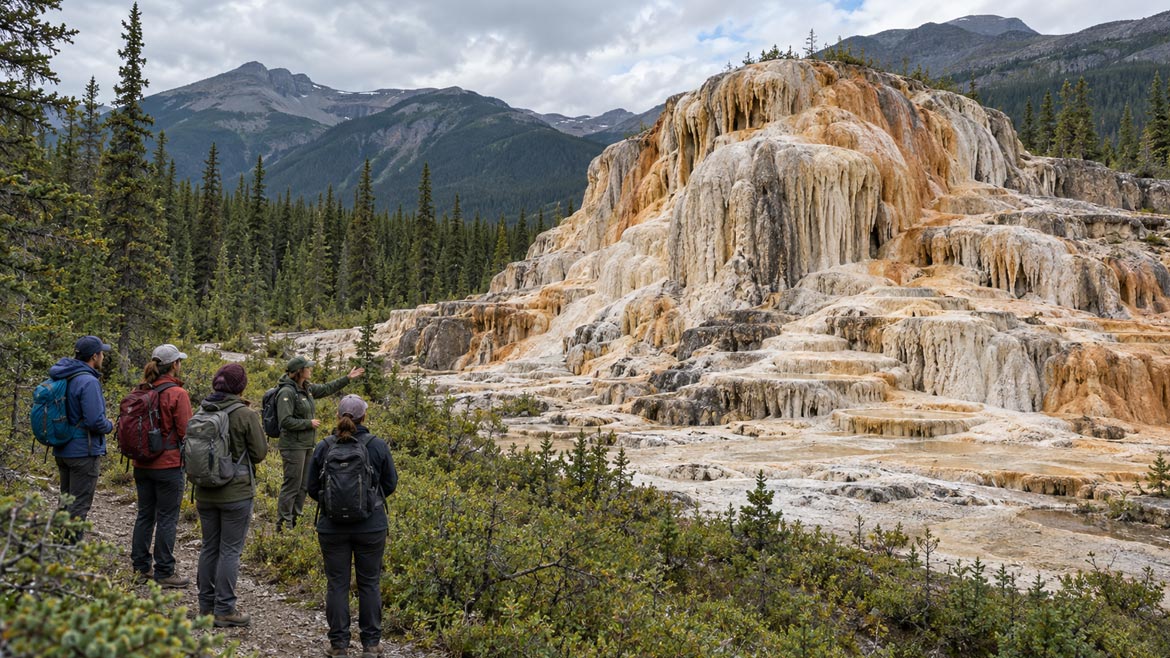
- Gahnįhthah’s mineral springs and tufa mounds
- Glacier Lake and routes toward the Cirque of the Unclimbables
- Boreal forest, alpine tundra, karst terrain, and thermal features
- Potential sightings of Dall’s sheep, moose, bears, mountain goats, wolves, and raptors
Wildlife sightings are never guaranteed. The river corridor is vast, and animals may be distant or concealed by vegetation and terrain.
Access to the fragile Gahnįhthah tufa mound is permitted only with park staff. If no guided visit is available, visitors must remain outside the restricted area and follow posted instructions.
Daily Mileage
River speed can change quickly with water levels, wind, and weather. Build itineraries around safe camps, portages, rest, and optional hikes rather than forcing a fixed daily distance.
Independent Travel or a Guided Expedition?
Independent paddling is permitted, provided the group follows reservation, registration, fee, access, and park regulations. It is not appropriate for travellers who are learning whitewater or backcountry rescue during the expedition.
A private river group should be able to demonstrate:
- Advanced moving-water canoeing or rafting skills
- Cold-water and swift-water rescue competence
- Wilderness first aid and casualty management
- Navigation without cellular coverage
- Bear-safe food and camp management
- Field repairs for boats and critical equipment
- Redundant satellite communication
- Flexible food, fuel, and medication supplies
- Capacity to wait through river or aviation delays
- Familiarity with park registration and de-registration
A guided expedition is usually the more practical choice for first-time northern paddlers, solo travellers seeking a group, or visitors without expedition equipment. Licensed outfitters can coordinate boats, group gear, meals, charter movements, route leadership, and reservations within the scope of their service.
Use the current Parks Canada list to confirm that an outfitter or charter company is legally authorized to operate in the park.
Where Guides Add Value
A guide cannot remove bad weather, cold water, or aviation delays. The advantage is a team with established equipment systems, river knowledge, emergency procedures, and realistic decision-making thresholds.
Adding Nahanni to a Northwest Territories Itinerary
Nahanni should determine the structure of the larger journey rather than being squeezed between inflexible bookings. Weather margins are easier to absorb when the park is the itinerary’s central commitment.
Yellowknife can be combined with Nahanni, but it is a separate destination with its own flights, accommodation, and activities. Do not assume that a Yellowknife stay automatically provides convenient access to the park.
Fort Simpson can support a more regionally focused itinerary involving the Mackenzie and Liard river systems, local cultural experiences, or additional Dehcho travel. Any community-based experience should be arranged respectfully through an appropriate local provider.
Arctic Circle or western Arctic extensions require additional flights and substantial travel time. They are sensible only when the schedule can absorb another layer of northern weather and transportation risk.
Sequencing Advice
Keep at least one flexible night on both sides of a major backcountry itinerary whenever flights permit. Avoid placing non-refundable international or southern connections immediately after the planned charter return.
Planning a Nahanni Expedition with Alaedin Travel Canada
Alaedin Travel Canada can help travellers compare licensed operators, sequence regional flights and accommodation, and build realistic weather margins around a Nahanni trip.
Planning should begin with five decisions:
- Day flight, hiking objective, or river expedition
- Guided or independent travel
- Preferred entry and exit points
- Suitable seasonal window
- Acceptable budget and delay exposure
Parks Canada remains the authority for reservations, registration, fees, closures, and park regulations. Licensed operators remain responsible for their expedition procedures and aircraft arrangements.
A carefully structured itinerary gives Nahanni the time and flexibility it requires without presenting wilderness travel as predictable or risk-free.
Tours

Eastern Canada Tour – 7 Days / 6 Nights
$950.00 /starting at
