Visiting Bruce Peninsula National Park: Access, the Grotto & Planning Tips
Visiting Bruce Peninsula National Park: Access, the Grotto & Planning Tips
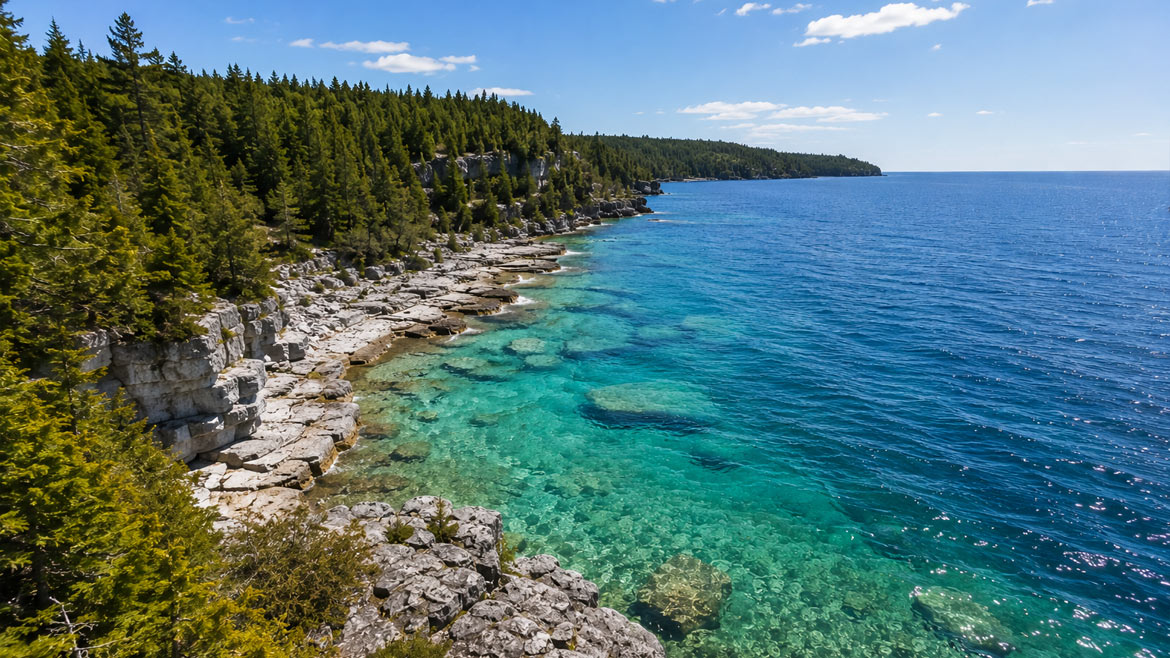
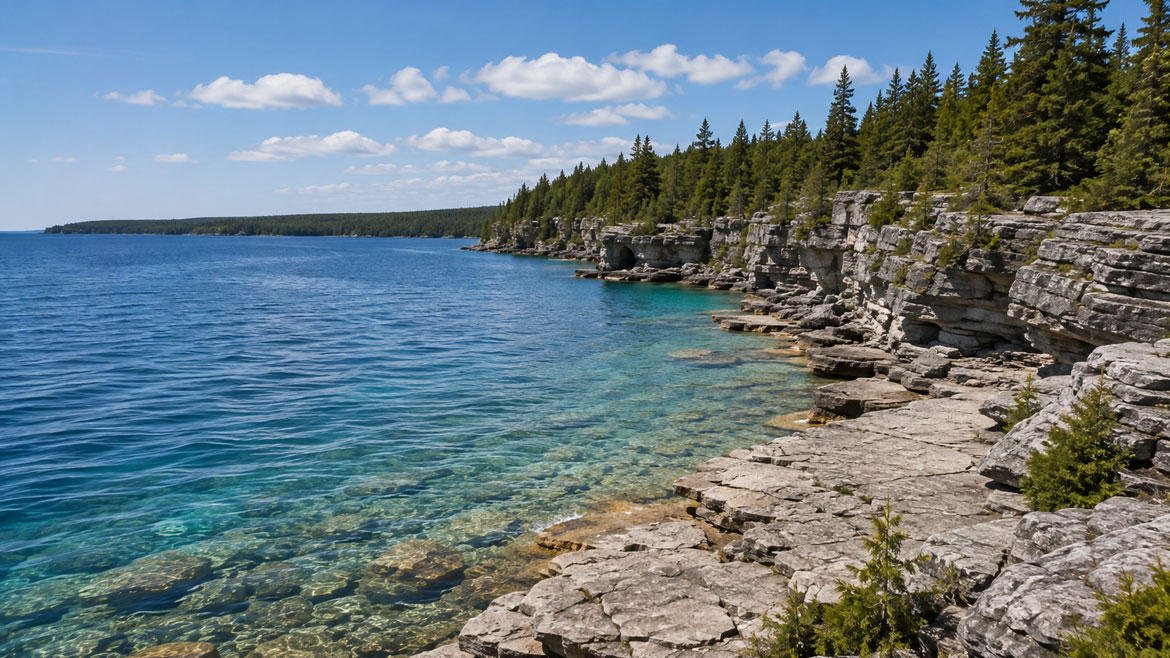
Bruce Peninsula National Park is one of Ontario’s most recognizable natural destinations, but visiting it successfully requires more planning than the photos suggest. Located near Tobermory at the northern end of the Bruce Peninsula, the park protects a rugged stretch of the Niagara Escarpment where limestone cliffs meet the clear, cold water of Georgian Bay.
The Grotto and Indian Head Cove attract much of the attention, yet they are only part of the experience. Hiking, camping, rocky shorelines, inland lakes and sections of the Bruce Trail make the park worth exploring beyond a single viewpoint.
The main challenge is access. Popular areas operate with limited parking, and the Grotto requires a confirmed parking reservation for much of the year. Driving several hours and simply arriving early is not a reliable strategy.
Weather and terrain also deserve more attention than they often receive. Georgian Bay can remain extremely cold in summer, waves can make shoreline entry and exit difficult, and some trails involve exposed rock, roots and uneven footing.
This guide explains how Bruce Peninsula National Park works in practice: how to get there, when reservations are required, what to expect at the Grotto, when to visit, how much time to allow and whether an independent or planned experience makes more sense for your trip.
Why Bruce Peninsula National Park Requires Advance Planning
Bruce Peninsula National Park is roughly 300 kilometres northwest of Toronto and sits near the northern tip of the peninsula separating Georgian Bay from the main body of Lake Huron. Parks Canada describes it as about a four-hour drive from Toronto, but actual journey times depend heavily on your starting point, traffic, road conditions and stops.
That distance alone makes spontaneous day trips difficult. More importantly, different parts of the park have separate access points and parking arrangements. You cannot assume that parking at one location gives you convenient walking access to another.
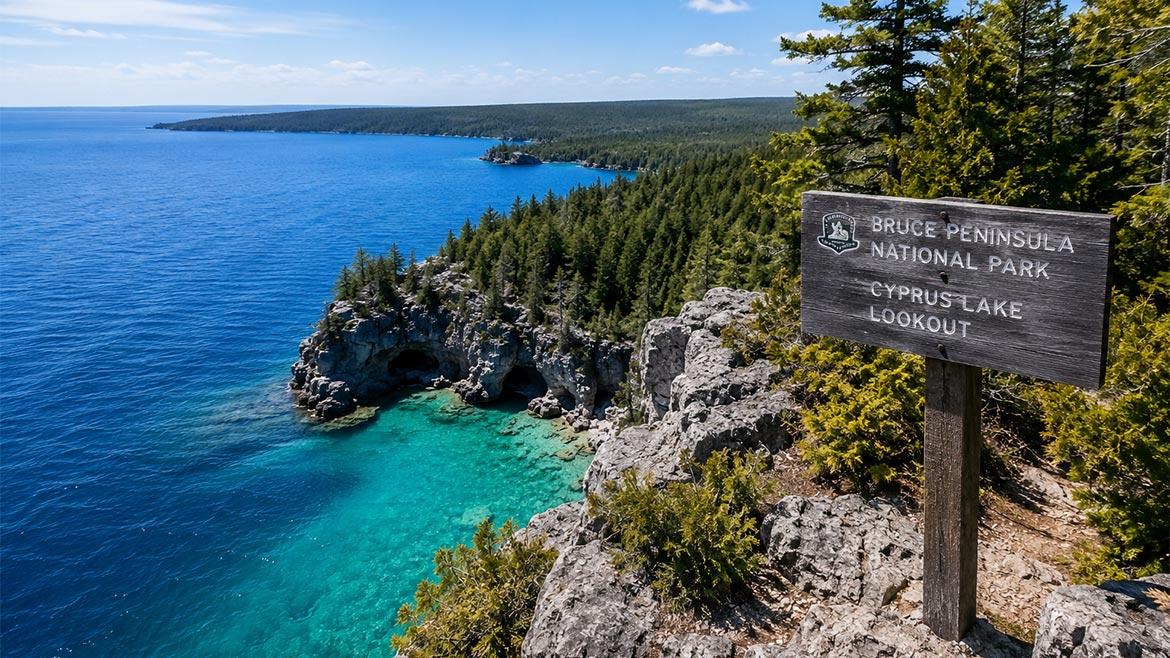
The Grotto and Cyprus Lake area, Halfway Log Dump, Singing Sands and the Parks Canada Visitor Centre are distinct destinations. Understanding which one you intend to visit should come before planning your driving route.
Distance and Travel Time from Southern Ontario
For travellers coming from Toronto or the Greater Toronto Area, Highway 6 is the principal route north towards the Bruce Peninsula. The drive becomes more rural as you continue north, so it is sensible to allow extra time rather than building an itinerary around the shortest possible navigation estimate.
This is especially important when you have a timed Grotto parking reservation. For day-use reservations, Parks Canada recommends arriving with at least two hours remaining in your reserved parking time slot.
Fuel up before heading to Tobermory, as fuel options on the northern Bruce Peninsula are limited.
If Bruce Peninsula National Park is part of a longer Ontario road trip, an overnight stay in or around Tobermory can make the itinerary considerably more manageable than driving from Toronto, visiting the park and returning on the same day.
Why Parking Capacity Determines Access
The most important planning detail is simple: access to the park’s most popular locations is limited by parking capacity.
For the 2026 season, a confirmed parking reservation is required to access the Grotto and Cyprus Lake day-use area from May 1 through October 31. Grotto reservations use four-hour parking windows.
Other locations have their own rules. For 2026, Halfway Log Dump requires parking reservations from June 19 to September 7, while Little Cove parking is managed by the Municipality of Northern Bruce Peninsula and requires reservations from May 15 to September 15.
The Visitor Centre and Singing Sands have first-come, first-served parking, but these lots can fill early and do not provide access to the Grotto, Halfway Log Dump or Little Cove.
This distinction is important. Parking somewhere else and attempting to walk into the Grotto area is not a practical workaround. Parks Canada does not permit visitors to walk along Cyprus Lake Road for access, and vehicles cannot simply drive in to drop passengers off.
**Pro Tip:** Do not treat early arrival as a substitute for a reservation. If the Grotto is your priority, secure the correct parking reservation first and plan the rest of the day around it.
How to Get to Bruce Peninsula National Park
Most visitors reach Bruce Peninsula National Park by road, but driving is not the only possible option. Your best choice depends on where you are travelling from, whether you want to visit other places on the peninsula and how much flexibility you need.
The Cyprus Lake area, which provides the standard day-use access for the Grotto and Indian Head Cove, is separate from the Parks Canada Visitor Centre in Tobermory. Check the exact destination before starting your drive rather than navigating only to “Bruce Peninsula National Park.”
Driving from Toronto and Southern Ontario
From southern Ontario, Highway 6 provides the main road access towards Tobermory and the national park. Parks Canada lists the park at approximately 300 kilometres from Toronto.
Driving gives you the greatest flexibility, particularly if your itinerary also includes Tobermory, Singing Sands or other destinations around the peninsula. It also makes it easier to carry hiking gear, additional clothing, water and other supplies.
However, having a vehicle does not override reservation requirements. During reservation periods, you still need the appropriate confirmed parking reservation for controlled locations.
Roadworks and seasonal traffic can also affect journey times. If you have a fixed Grotto time slot, build a reasonable buffer into the drive rather than scheduling your arrival close to the end of the reservation window.
Reaching the Park Without a Car
Bruce Peninsula National Park is less straightforward without a private vehicle, but car-free travel is possible on selected dates.
Parkbus operates seasonal trips from Toronto to Bruce Peninsula National Park, including trips serving the Grotto. Schedules are limited and can change by season, so travellers should confirm current operating dates, destinations and what is included before making accommodation or park plans around the service.
The MS Chi-Cheemaun ferry also connects the Bruce Peninsula with Manitoulin Island during its operating season. This is more relevant to travellers approaching from northern Ontario or incorporating Manitoulin Island into a wider road trip than to most Toronto-based visitors.
For travellers relying on buses, tours or other scheduled transportation, timing matters even more because park access and transport schedules must work together.
**Pro Tip:** Confirm your park access and transportation as one itinerary. A bus ticket to the area does not automatically mean you have access to every part of the national park.
Grotto Parking Reservations, Admission and Visitor Fees
The Grotto reservation system is one of the most important parts of planning a Bruce Peninsula trip. It exists because the Cyprus Lake and Georgian Bay shoreline area has limited capacity and receives very high visitor demand.
For 2026, Grotto parking reservations are required from May 1 to October 31. Reservations provide a four-hour parking time slot rather than unrestricted day-long parking.
Parks Canada offers several four-hour parking time slots throughout the day. Availability can change quickly, particularly during summer weekends and holidays, so booking ahead is strongly recommended.
Bring your reservation confirmation and photo identification matching the name on the reservation. Parking reservations are not transferable or permitted to be resold, and changes to the reservation holder, date or time slot are not permitted; you must cancel and make a new reservation, subject to availability.
Park costs can include admission, parking and reservation fees depending on when and how you visit. Rates and temporary federal programs can change from one season to another, so checking the current Parks Canada fee information before booking is more reliable than planning around an older published price.
In 2026, the Canada Strong Pass provides free admission to Parks Canada-administered places from June 19 through September 7. However, free admission does not cover parking or reservation fees and does not guarantee access to the Grotto. A confirmed parking reservation is still required during the applicable reservation period.
**Pro Tip:** Think of the Grotto reservation as the fixed point in your itinerary. Once you have it, arrange driving, meals, Tobermory and other activities around that time rather than the other way around.
Best Time to Visit Bruce Peninsula National Park
There is no single best month for every traveller. Summer provides the warmest air temperatures and the widest range of tourism services in the region, but it also brings the highest visitor demand.
Spring and autumn can offer quieter trails, while winter changes the park into a much more demanding environment with fewer services and unmaintained trails.
Your ideal timing should therefore depend on whether your priorities are swimming, hiking, photography, camping, lower crowds or simply seeing the Grotto.
Summer: Warm Weather and Peak Demand
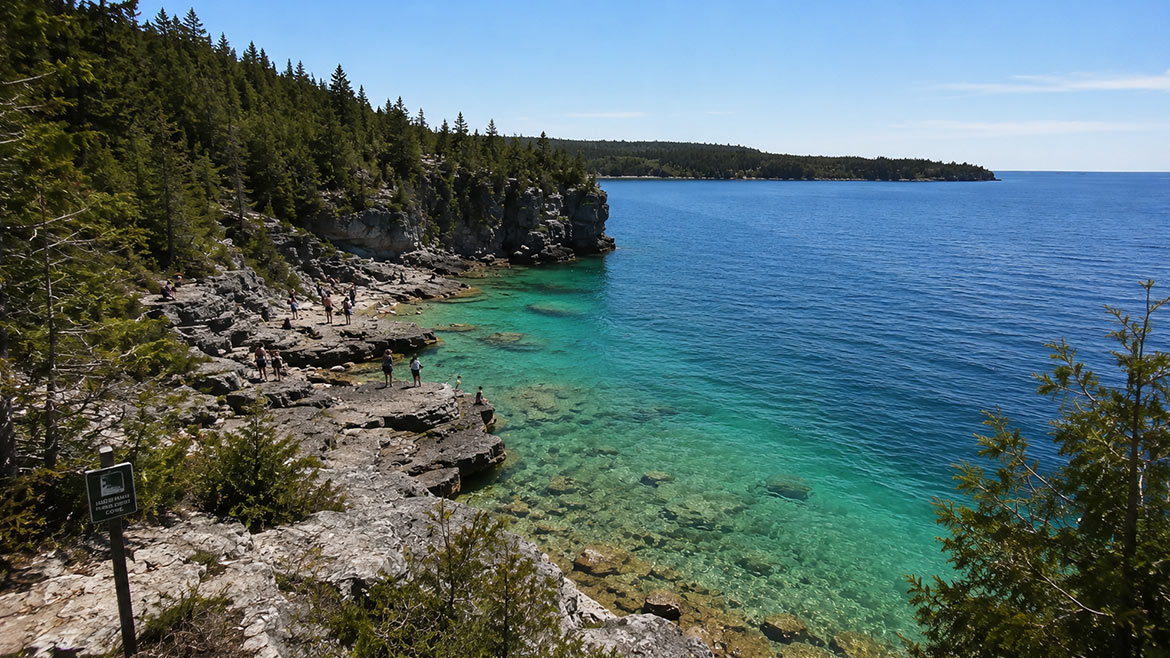
Bruce Peninsula National Park is busiest from mid-June to mid-September, with weekends also particularly busy from May through October.
Summer offers long daylight hours and generally more comfortable hiking temperatures, but visitors should not confuse warm air with warm water. Georgian Bay can remain extremely cold even in midsummer.
The combination of high demand and limited parking makes reservations especially important. Accommodation around Tobermory can also be busy, so travellers planning an overnight visit should secure lodging or camping well in advance.
Summer works well if you want the broadest choice of activities and are comfortable planning ahead. It is less suitable for travellers hoping for a spontaneous, uncrowded visit.
Spring and Autumn: Quieter but More Variable
May, early June, late September and October can appeal to visitors who care more about hiking and scenery than swimming.
Crowds are generally lower outside peak summer, although weekends can still be busy. Temperatures can change quickly, particularly along exposed sections of the Georgian Bay shoreline, and rain can make rocky surfaces more difficult.
Autumn also brings shorter daylight hours. Longer hikes should be planned around sunset rather than assuming summer-length days.
Grotto parking reservations remain required through October 31, so visiting in autumn does not automatically eliminate the need to book.
Winter: A Different Type of Visit
Bruce Peninsula National Park remains accessible in winter, but it should not be approached as a quieter version of a summer visit.
Trails are not maintained for winter hiking, snow and ice can obscure hazards, and the Georgian Bay shoreline can become extremely slippery. Parks Canada specifically warns visitors not to rely on lake or shoreline ice and does not monitor ice thickness.
Winter visits are better suited to travellers prepared for cold-weather outdoor recreation and changing trail conditions.
Georgian Bay Weather and Water Safety
Weather at Bruce Peninsula National Park deserves serious consideration because much of the appeal lies along an exposed rocky shoreline.
Cold water is one of the biggest hazards. Parks Canada warns that Georgian Bay can be extremely cold even during summer and that cold-water exposure can cause shock. Waves can also make it difficult to climb out of the water onto slippery rocks.
There are no lifeguards in Bruce Peninsula National Park. Swimming is at your own risk, and cliff jumping is dangerous.
Conditions that look manageable in photographs or from higher ground can feel very different once you reach the shoreline. Wind, waves and wet rock should influence whether you enter the water, not simply the temperature shown on a weather app.
**Pro Tip:** Pack for conditions at Georgian Bay rather than for conditions in Toronto. Proper footwear, a wind-resistant outer layer and additional warm clothing can remain useful even on a summer trip.
Visiting the Grotto and Indian Head Cove
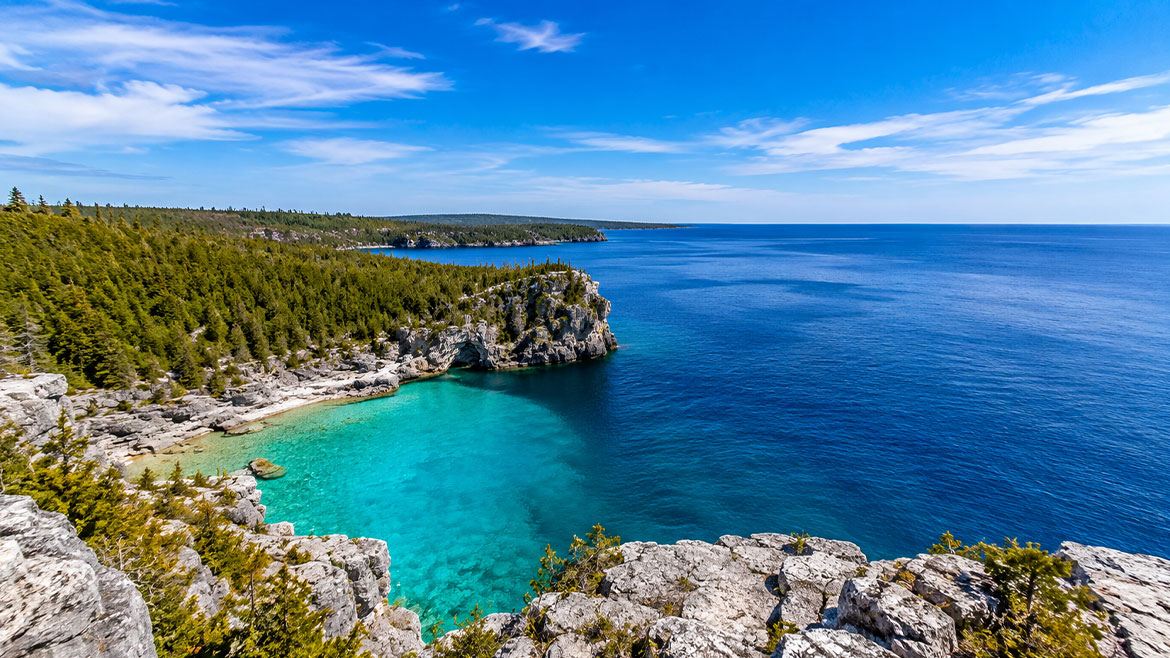
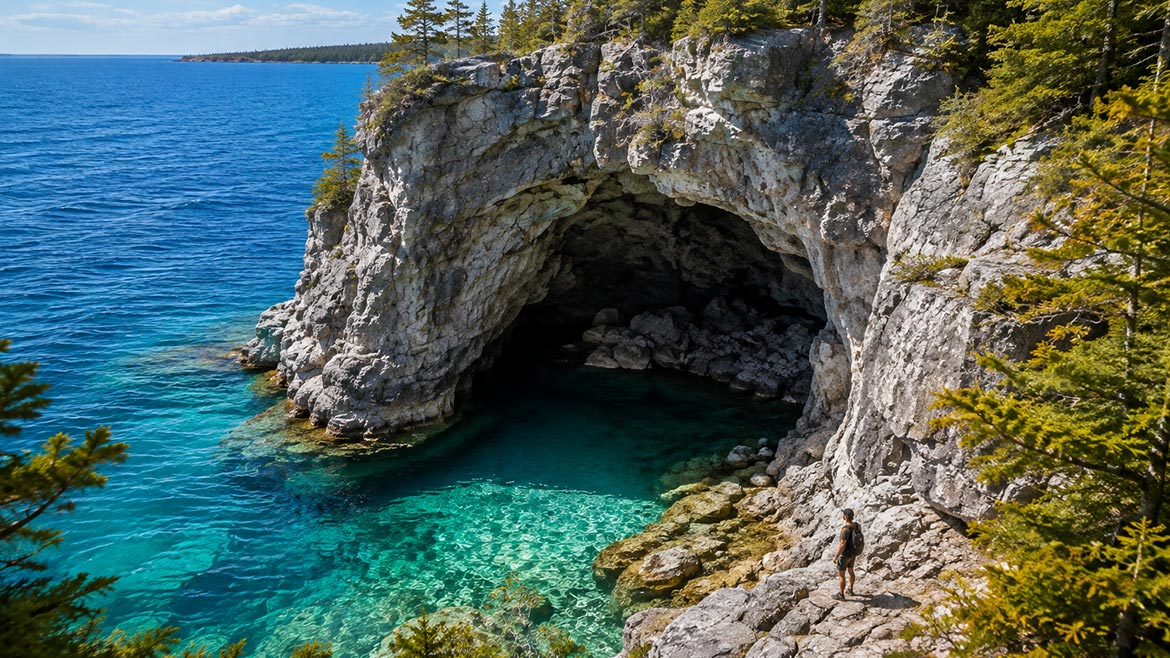
The Grotto is a natural sea cave on the Georgian Bay shoreline and the best-known attraction within Bruce Peninsula National Park. Nearby Indian Head Cove, rocky beaches and sections of the Bruce Trail make the Cyprus Lake area much more than a quick photo stop.
The experience is also more physical than many first-time visitors expect. Reaching the shoreline requires hiking, and exploring beyond the easiest trail sections involves uneven rock and more challenging terrain.
How Difficult Is the Hike to the Grotto?
The Grotto is approximately one kilometre from the main parking area, but distance alone does not describe the entire experience.
Parks Canada lists the Georgian Bay–Marr Lake route to Indian Head Cove and the Grotto as 3 kilometres, with difficulty ranging from moderate to difficult. Sections near the shoreline include rocks and boulders, so supportive footwear is preferable to sandals or footwear designed only for the beach.
The Georgian Bay Trail is the quickest route to the park’s scenic cliffs and shoreline, where the trail becomes rocky and requires additional balance and care.
Allow time to walk at your own pace. The direct hike to the Grotto, Indian Head Cove and the Georgian Bay shoreline is roughly one hour round trip, while longer routes through the Cyprus Lake area can take considerably more time. The four-hour parking window gives day visitors time to hike, explore the shoreline and return to their vehicle.
Can You Swim at the Grotto?
Swimming is possible when conditions are suitable, but it should never be treated as a guaranteed part of the visit.
The water is cold, the shoreline is rocky, there are no lifeguards and wave action can make getting out of the water difficult. Visitors should assess conditions on the day and stay within their own swimming ability.
Seeing the Grotto does not require entering the water. For many visitors, hiking and viewing the cave and surrounding Georgian Bay shoreline are the main experience.
Cyprus Lake and Other Nearby Park Areas
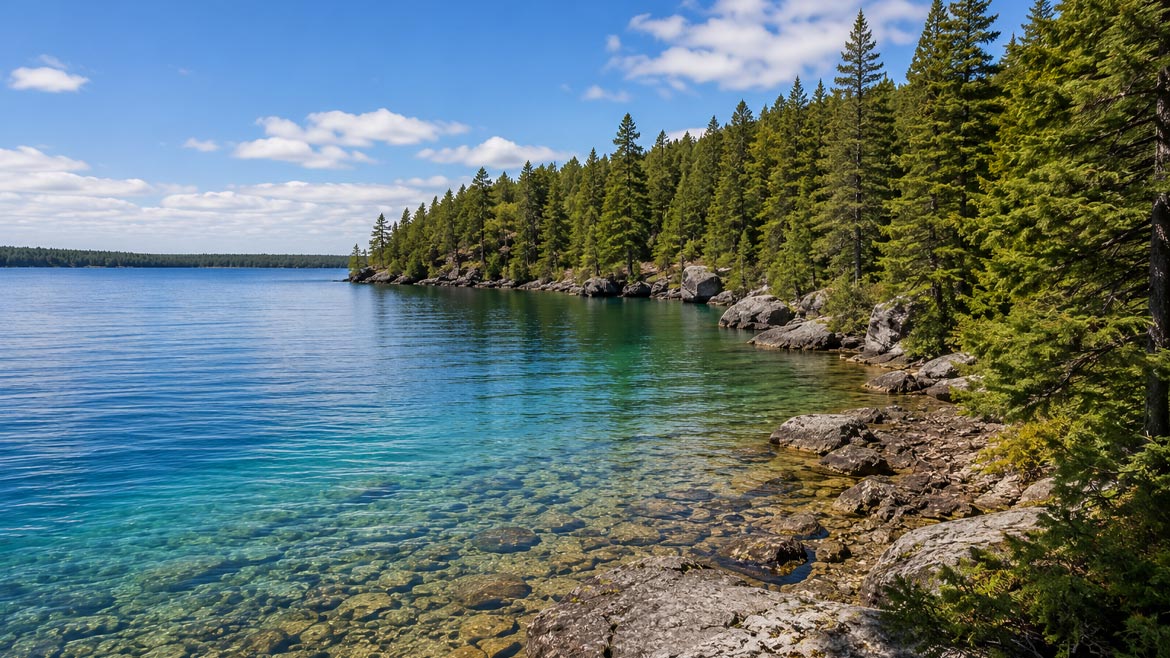
Cyprus Lake offers a different environment from the exposed Georgian Bay coast. The five-kilometre Cyprus Lake Trail is one of the park’s less rugged hiking options and generally takes visitors through forest and around the lake rather than along exposed cliff edges.
Canoeing and kayaking are also possible on Cyprus Lake, although Parks Canada does not currently provide canoe or kayak rentals within the national park. Motorized vessels are not permitted on Cyprus Lake or Emmett Lake.
Elsewhere, Halfway Log Dump provides access to another impressive section of the Georgian Bay shoreline and the Bruce Trail. During its peak reservation period, parking must also be booked in advance.
The Parks Canada Visitor Centre near Tobermory is useful for travellers who want interpretive exhibits and a more accessible introduction to the area. A trail from the centre leads to the Little Dunks Bay lookout.
**Pro Tip:** Do not attempt to use Little Cove or Halfway Log Dump as an improvised alternative route to the Grotto. The Bruce Trail connections are long, rugged and intended for properly equipped hikers, not as shortcuts around parking restrictions.
How Long Should You Spend at Bruce Peninsula National Park?
A four-hour Grotto reservation can be enough to see the Grotto, Indian Head Cove and the nearby shoreline, but it is not enough to experience the wider park.
For a first visit from southern Ontario, a full day is the practical minimum. That gives you time for your reserved Grotto visit and potentially another nearby stop without turning the day into a sequence of deadlines.
An overnight stay is preferable if you want to combine the national park with Tobermory, longer hikes or other attractions in the area. Two days also provide some flexibility when weather conditions make swimming, paddling or shoreline exploration less appealing.
A Toronto-to-Bruce Peninsula return trip on the same day is possible, but it creates a long day of driving. Travellers who prefer a slower itinerary are generally better served by staying overnight in the region.
Accessibility and Physical Considerations
Bruce Peninsula National Park includes accessible facilities, but accessibility varies considerably by location. The rugged geology that makes the Georgian Bay shoreline distinctive also creates barriers for travellers with limited mobility.
The Parks Canada Visitor Centre has accessible parking, washrooms and indoor facilities. The trail to Little Dunks Bay Lookout offers a more accessible way to experience the area, with a packed-gravel surface, resting areas and relatively gentle changes in elevation.
In the Cyprus Lake area, accessible parking must be reserved during the reservation season and requires a valid government-issued accessibility permit. Some trails in the Cyprus Lake area have packed-gravel or boardwalk sections, but the natural rocky terrain near the Grotto shoreline should not be assumed to be wheelchair accessible.
Travellers with mobility concerns should review Parks Canada’s location-specific accessibility information before booking. Families with young children should make a similar assessment rather than relying only on hiking distance.
Independent Visit vs. Guided or Curated Travel
Bruce Peninsula National Park can be visited independently, and many travellers prefer the freedom of having their own vehicle and setting their own pace. The key is understanding that independence does not remove the park’s reservation, parking and capacity rules.
A guided or curated approach becomes more useful when time is limited, the traveller is unfamiliar with Ontario, or Bruce Peninsula is one stop within a larger itinerary.
The differences are less about what you are “allowed” to see and more about who handles the logistics.
| Planning Factor | Independent Visit | Guided or Curated Travel |
| Park and parking requirements | Traveller researches and manages them | Integrated into trip planning where applicable |
| Transportation | Self-drive or independently booked | Coordinated with the itinerary |
| Daily timing | Maximum personal control | Structured around access and travel times |
| Weather changes | Traveller adjusts plans | Alternatives can be considered in advance |
| Local logistics | Self-researched | Supported by destination planning |
| Best suited to | Flexible road trippers | First-time visitors or time-limited itineraries |
Independent travel works particularly well for experienced Ontario road trippers who are comfortable managing reservations and adapting their plans.
Curated travel can be more efficient for international visitors, families, groups and travellers combining Toronto, Niagara Falls and other Ontario destinations with the Bruce Peninsula.
**Pro Tip:** The main benefit of planning support is not avoiding park rules. It is designing the itinerary around them so that transport, reservations and other activities work together.
Planning Bruce Peninsula With Alaedin Travel Canada
Bruce Peninsula National Park can fit naturally into a wider Ontario itinerary, but its distance from Toronto and controlled access to popular locations make sequencing important.
Alaedin Travel Canada can help travellers assess how the Bruce Peninsula fits with the rest of their Canada trip, including transportation, accommodation and tour planning. The objective is to create a realistic itinerary rather than adding the park to an already crowded schedule.
Before building a Bruce Peninsula visit into an itinerary, the main planning points should be reviewed together.
* Day-use and parking reservation requirements
* Seasonal access conditions
* Driving and transportation time
* Accommodation requirements
* Traveller mobility and trail suitability
* Weather and shoreline safety considerations
* Time needed for Tobermory or other nearby attractions
* Alternative plans if conditions affect outdoor activities
For travellers coming from outside Ontario, this type of coordination can be particularly useful because the park’s geography and reservation system are not obvious from a map.
What to Combine With Bruce Peninsula National Park
The northern Bruce Peninsula has enough to justify more than a rushed day trip. If your schedule allows, combining the national park with nearby Tobermory and Fathom Five National Marine Park creates a more complete visit to the region.
Tobermory is the main community at the tip of the peninsula and is a practical base for accommodation, restaurants and marine excursions. The Parks Canada Visitor Centre is also close to the village.
Fathom Five National Marine Park protects islands and waters off Tobermory and is separate from Bruce Peninsula National Park. Flowerpot Island is one of its best-known destinations and is reached by boat rather than through the Grotto area. Boat schedules and island access are seasonal and weather-dependent.
Travellers continuing north can use the seasonal MS Chi-Cheemaun ferry between Tobermory and South Baymouth on Manitoulin Island, making the Bruce Peninsula a useful component of a longer Ontario road trip.
Trying to combine all of these experiences with a same-day drive from Toronto is usually too ambitious. An overnight stay provides a much more practical itinerary.
Essential Tips Before Visiting Bruce Peninsula National Park
A successful visit depends more on preparation than on creating a complicated schedule. Once your access is confirmed, focus on arriving prepared for the park’s terrain and changing conditions.
Keep these points in mind before departure:
* Reserve Grotto parking in advance when visiting between May 1 and October 31.
* Check reservation requirements separately for Halfway Log Dump and Little Cove.
* Do not assume parking at the Visitor Centre or Singing Sands provides access to the Grotto.
* Allow extra travel time for seasonal traffic and active construction projects on the Bruce Peninsula.
* Fuel before reaching Tobermory.
* Wear proper footwear for rocky and uneven trails.
* Carry drinking water and appropriate layers.
* Check weather, trail conditions, road conditions and current Parks Canada notices before leaving.
* Treat Georgian Bay as cold, open water even during summer.
* Stay within your reserved parking window.
* Arrive with at least two hours remaining in your reserved parking time slot.
* Do not rely on remote trail access as a substitute for a Grotto reservation.
* Book accommodation early if staying overnight during peak summer periods.
The park is much easier to enjoy once the essential logistics are settled before you arrive.
Is Bruce Peninsula National Park Worth Visiting?
Bruce Peninsula National Park is worth the journey for travellers interested in hiking, geology, Georgian Bay scenery and outdoor experiences that feel very different from southern Ontario’s major cities.
Its appeal comes partly from that ruggedness. The Grotto is not a developed urban attraction with unlimited admission, paved access and predictable conditions. Parking is finite, trails can be rough and the water demands caution.
Those constraints should not discourage visitors. They simply mean the park rewards a different style of travel: reserve first, allow enough time, bring suitable gear and avoid building an itinerary that depends on everything going exactly to schedule.
For a short Ontario trip, the long drive from Toronto needs to be weighed against other priorities. For travellers already exploring the Bruce Peninsula—or willing to stay overnight near Tobermory—the park can easily justify the detour.
Frequently Asked Questions About Bruce Peninsula National Park
These are some of the most common questions travellers ask when planning a visit to Bruce Peninsula National Park and the Grotto.
Do I need a reservation to visit Bruce Peninsula National Park?
Not for every area. In 2026, Grotto and Cyprus Lake day-use parking requires a reservation from May 1 to October 31. Other areas have separate rules.
Can I visit the Grotto without a parking reservation?
Not during the reservation season. If Grotto parking is fully booked, you should not rely on another parking area as an alternative.
How long is the hike to the Grotto?
The Grotto is about 1 kilometre from the main parking area. The broader Georgian Bay–Marr Lake route is about 3 kilometres.
How much time do I need at the Grotto?
Your parking reservation gives you a four-hour window. The direct hike to the Grotto and nearby shoreline takes roughly one hour round trip, leaving time to explore before returning to your vehicle.
Can you swim at the Grotto?
Yes, when conditions are suitable, but the water is extremely cold and there are no lifeguards. Rocky shorelines and waves can also make swimming hazardous.
What is the best month to visit Bruce Peninsula National Park?
July and August offer warmer weather but the highest visitor demand. Late spring and early autumn are generally better for quieter hiking.
Can I visit Bruce Peninsula National Park as a day trip from Toronto?
Yes, but expect roughly four hours of driving each way. An overnight stay near Tobermory is more comfortable for exploring beyond the Grotto.
Is Bruce Peninsula National Park suitable for families?
Yes, provided you choose trails appropriate for your group. Rocky terrain, uneven surfaces and cold water require extra care with young children.
Is the Grotto wheelchair accessible?
The park has accessible facilities and some accessible trails, but the Grotto and Indian Head Cove shoreline are not wheelchair accessible.
Can I visit Bruce Peninsula National Park without a car?
Yes, on selected dates. Seasonal services such as Parkbus can provide access from Toronto, but schedules should be confirmed in advance.
Is there camping inside Bruce Peninsula National Park?
Yes. Camping options include Cyprus Lake Campground, yurts and backcountry sites at Stormhaven and High Dump. Reservations are required.
Can Cyprus Lake campers walk to the Grotto?
Yes. Campers can hike to the Grotto from Cyprus Lake Campground. A separate parking reservation is required if you want to use the Grotto day-use parking lot.
Do I need a Parks Canada Discovery Pass?
A Discovery Pass is not required. You can normally pay the applicable daily admission instead. A Discovery Pass may be worthwhile if you plan to visit several Parks Canada sites.
What should I wear to Bruce Peninsula National Park?
Wear sturdy footwear for rocky and uneven trails and bring layers, including a wind- or rain-resistant outer layer.
How many days should I spend on the Bruce Peninsula?
One full day works for a focused park visit. One or two nights are better if you also want to explore Tobermory, Fathom Five National Marine Park or additional trails.
Plan the Park Around Access, Not Assumptions
Bruce Peninsula National Park is not difficult to visit once its logistics are understood. The biggest mistakes usually happen before travellers arrive: assuming parking will be available, underestimating the drive, treating the Grotto as a quick roadside stop or expecting Georgian Bay to behave like a warm recreational lake.
Secure the access you need first. Then build enough time around it for the drive, trail conditions and weather.
With that groundwork in place, the park becomes what it should be: an opportunity to experience one of Ontario’s most distinctive stretches of the Niagara Escarpment rather than a day spent negotiating parking and timing problems.
If Bruce Peninsula National Park is part of a larger Ontario or Canada itinerary, Alaedin Travel Canada can help coordinate the visit with transportation, accommodation and other destinations so the route works as a whole.
Tours

Eastern Canada Tour – 7 Days / 6 Nights
$950.00 /starting at

Eastern Canada Tour – 9 Days / 8 Nights
$1,790.00 /starting at

Vancouver Victoria Whistler Tour – 5 Days / 4 Nights
$2,990.00 /starting at

Banff, Lake Louise & Canadian Rockies Tour – 4 Days / 3 Nights
$2,990.00 /starting at

Quebec, Montreal & Ottawa 5-Day Tour – 5 Days / 4 Nights
$1,199.00 /starting at
Niagara Falls One-Day Tour
$ /starting at
1000 Islands One-Day Tour
$ /starting at